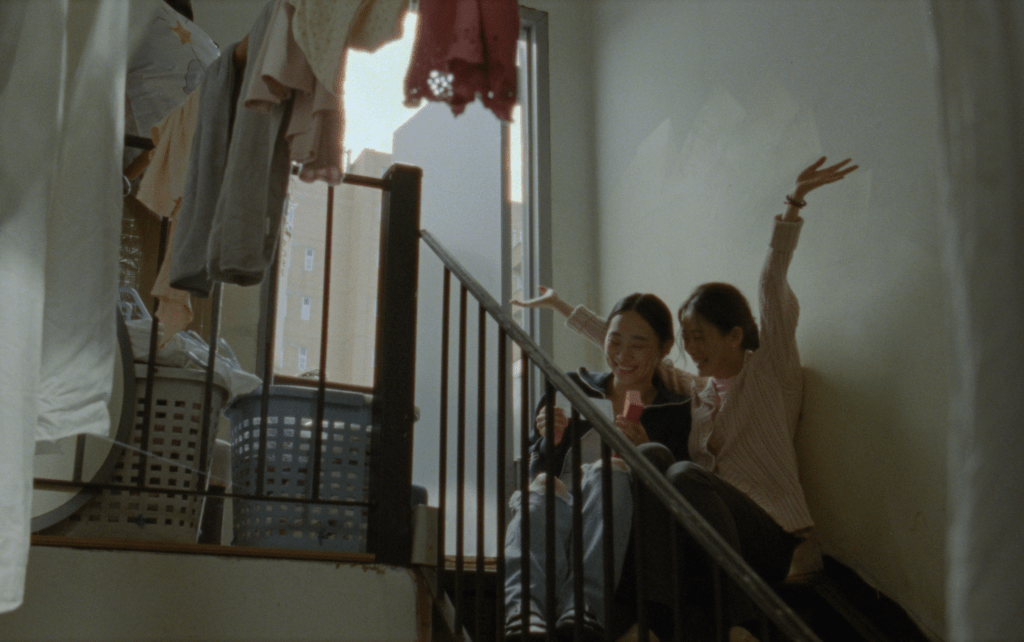
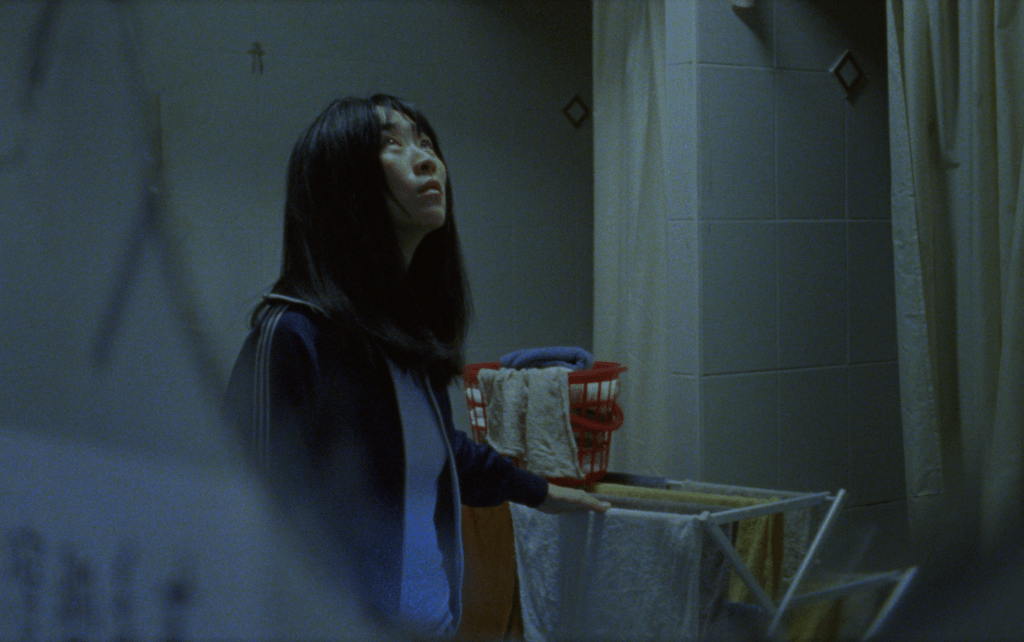
A poignant, warm drama depicting the lives of a small, tight-knit group of Sino immigrants in New York City, Constance Tsang’s calmly paced and tender directorial debut is remarkable in its artistry and focus.
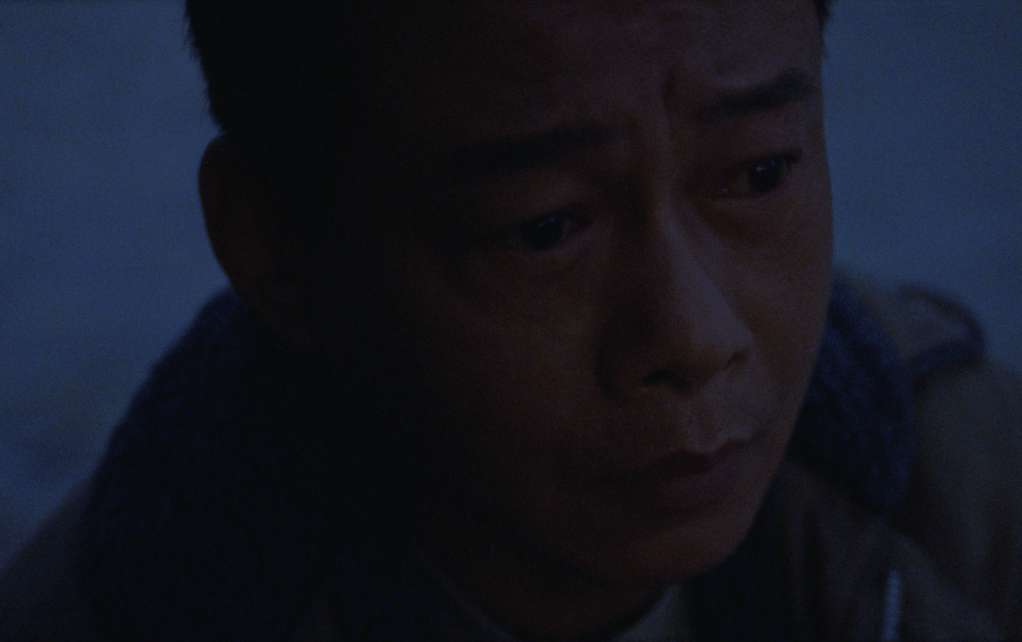
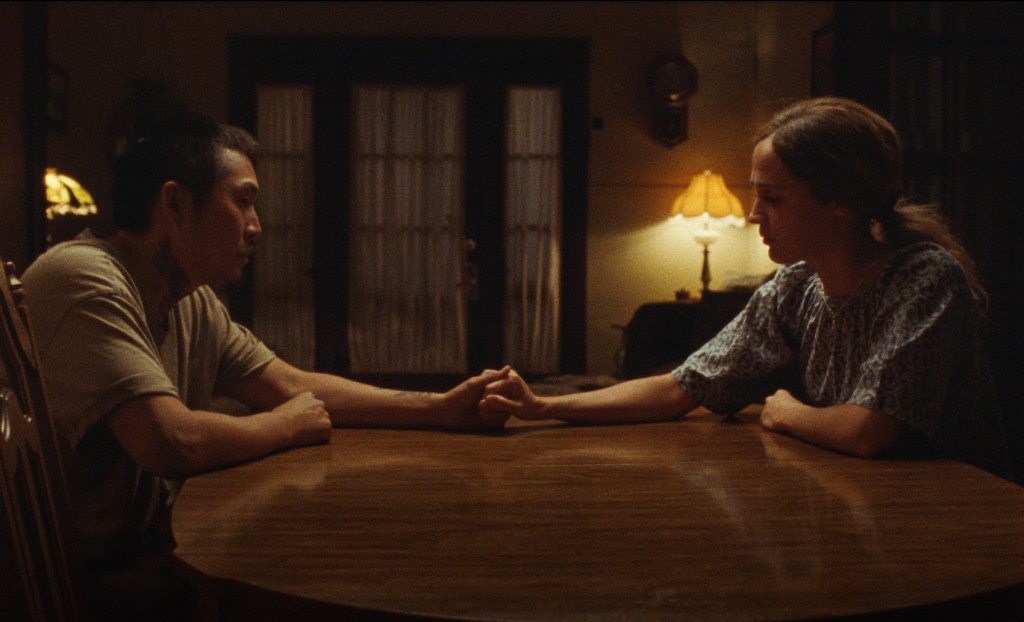
Lee Kang Sheng is Cheung, revealed to be separated by physical distance from his wife and consequently growing emotionally distant from her as well. He spends his nights dining with Didi (Xu Haipeng), a masseuse who reciprocates his romantic interest, while they discuss their meal and its intricacies. Cheung is clearly a lonely man. Does Didi fill a void for him, or has he found a person he truly connects with and he shows genuine kindness to?
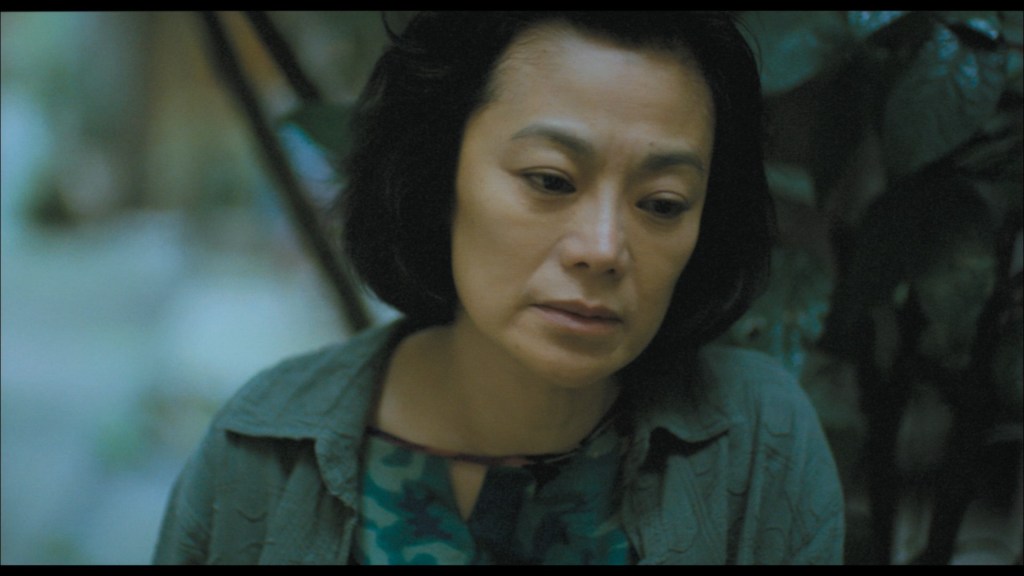
Didi is an experienced masseuse who is a sort of mentor and guardian to her friend and colleague Amy (played by Wu Ke Xi with heartbreaking and graceful complexity). Didi and Amy hope and dream of leaving the tiny massage parlor in Flushing, Queens and going on to open a restaurant in Baltimore, Maryland. Tragedy unfolds during a robbery, however, and that dream is put on hold, but eventually, hope springs eternal.
One of my favorite quotes by Roger Ebert which I’ve mentioned before is that movies “are like a machine that generates empathy” for people who were born into different circumstances from the audience. I always come back to that quote with movies like Blue Sun Palace. These immigrants have found hard work for little pay, and are frequently abused by customers aware of the illegality of sex work in massage parlors but insist anyway, despite the parlor stressing that sex work will not be offered, only for these customers to constantly fail to pay the full amount promised for the act they demanded from the masseuse. I can’t imagine the film strays too far from the reality of this experience. It’s infuriating to see, but the anger gives way to sorrow as these workers don’t seem to have any recourse. Justice denied, dreams deferred. Life is hard and brutal.
Premiering at Cannes on 19 May 2024, it was released in theaters on 25 April 2025.
Shot on 35mm film, the cinematography is gorgeous. Even within the limited confines of the massage parlor, with its cold walls and atmosphere, there is a beauty that is hard to explain. I’m not even a “film is always better than digital” guy, but 35 was so obviously the right choice for this work. The film itself is as minimalist as the massage parlor’s decor; a decision that does well to emphasize the melancholy and loneliness the characters face. Yet, the warmth the characters bring to each other’s lives goes a long way to counter the oppressiveness of their squalid surroundings. These sensitive people care for each other, and maybe one could argue that they have to, but they uplift each other, cook for each other, help with cleaning and laundry, check on each other. It’s not just the bare minimum. As cruel as some of the patrons of the massage parlor can be, the workers counter that by trying to make each other happy. I should clarify that I was so moved by the film that I saw it twice in the same theater on consecutive weekends.
I won’t go so far as to say the film is slow paced, because slow can sometimes be a pejorative. It is a measured pace, and the film takes the time it needs, indeed the time the audience needs, to depict these lives and their trials. The characters take the time they need to talk to each other about their dreams, and they never know how much time they have, but they always make time for each other. They help each other navigate grief and love. These are regular people on display and it is incredibly profound. The film’s naturalism is a stunning achievement. Dreams and desire, desolation and depression, happiness and helplessness; the shifts between them are hard to navigate sometimes. I guess now I’m talking about life more than the film now.
5/5 Blue Sun Palace Written and directed by Constance Tsang
There is very little I could say or explain about Pablo Berger’s Robot Dreams that hasn’t already been said or explained by perhaps better – certainly more professional – critics and writers, but what is the Internet for if not screaming into the void? An adaptation of a graphic novel by Sara Varon, the film is wonderful. It is a perfect masterpiece and a moving depiction of friendship and loss.
I hope in 2 or 3 or maybe 4 years people will look back on Robot Dreams as one of the greatest films of all time, and even the most important film since Drive My Car. I may seem hyperbolic, but it is a genuine treasure and its timing could not be better. Like the graphic novel, it is accessible to children, but adults will be the ones capable of understanding its themes and reflecting on their experiences.
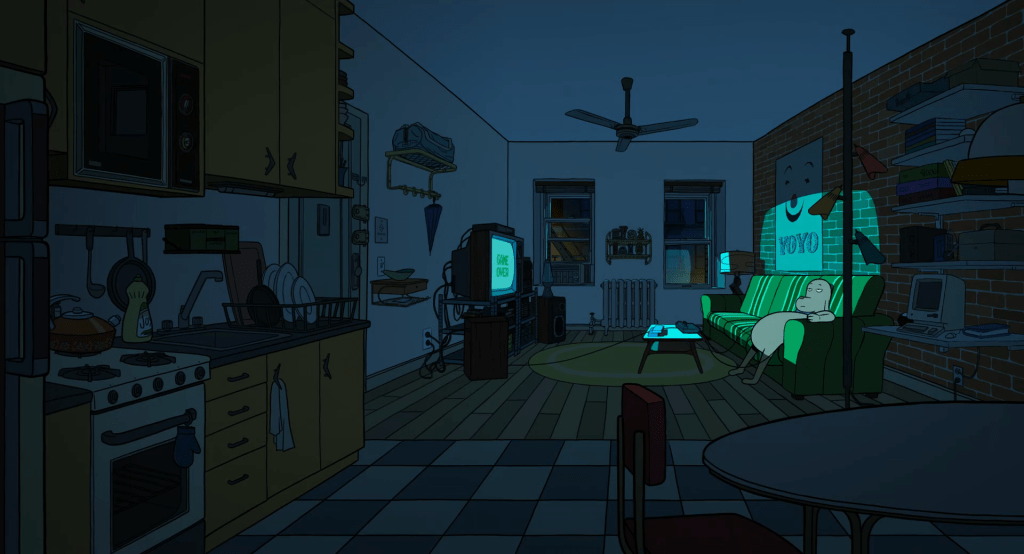
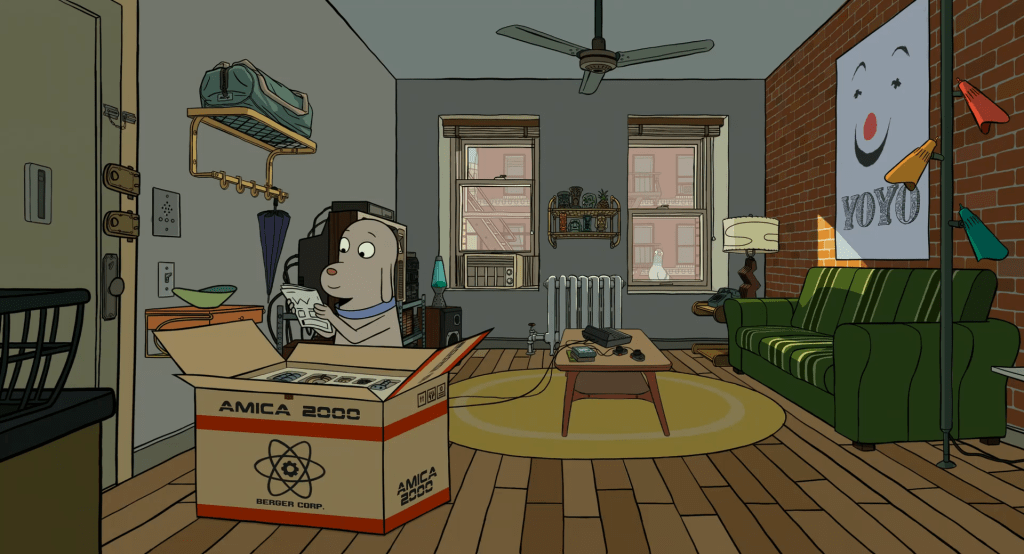
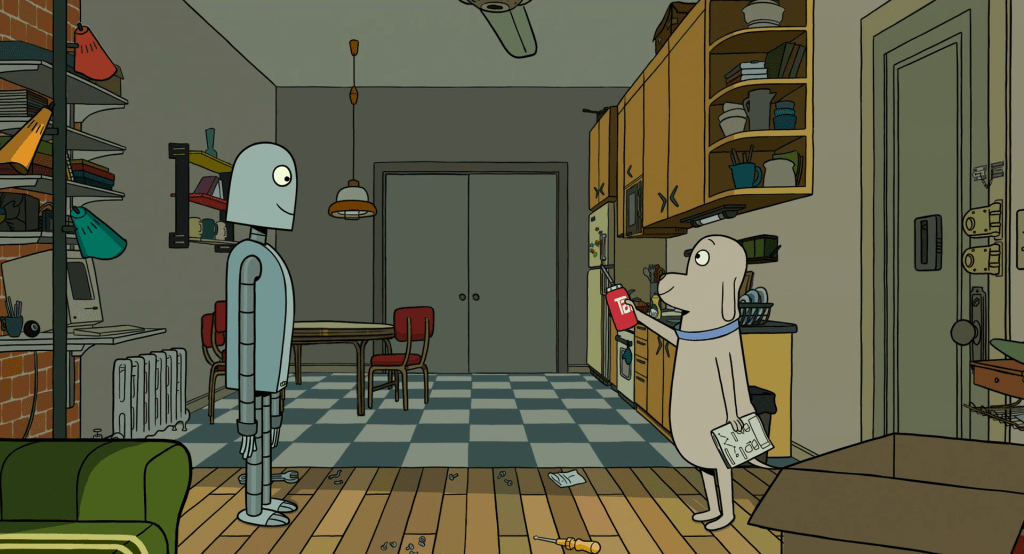
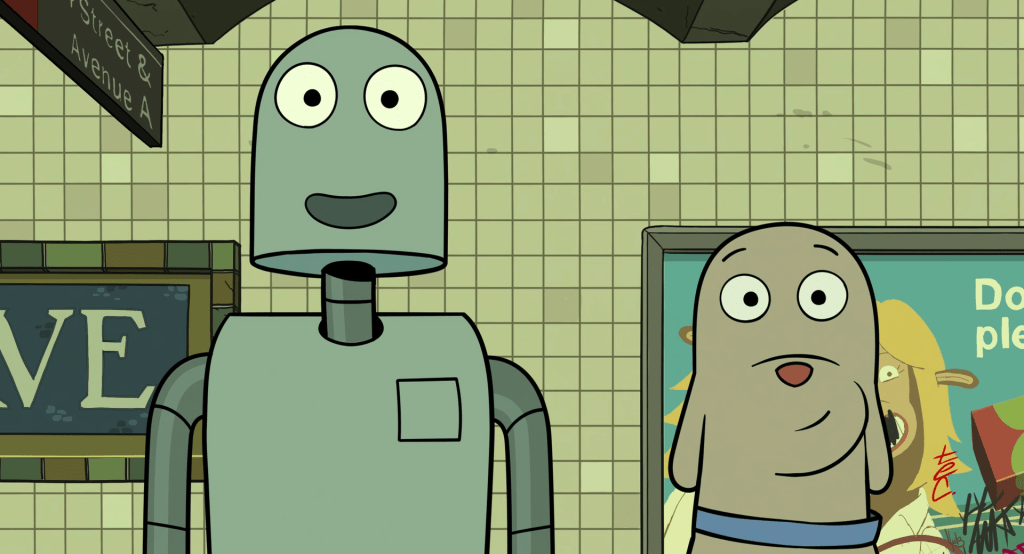
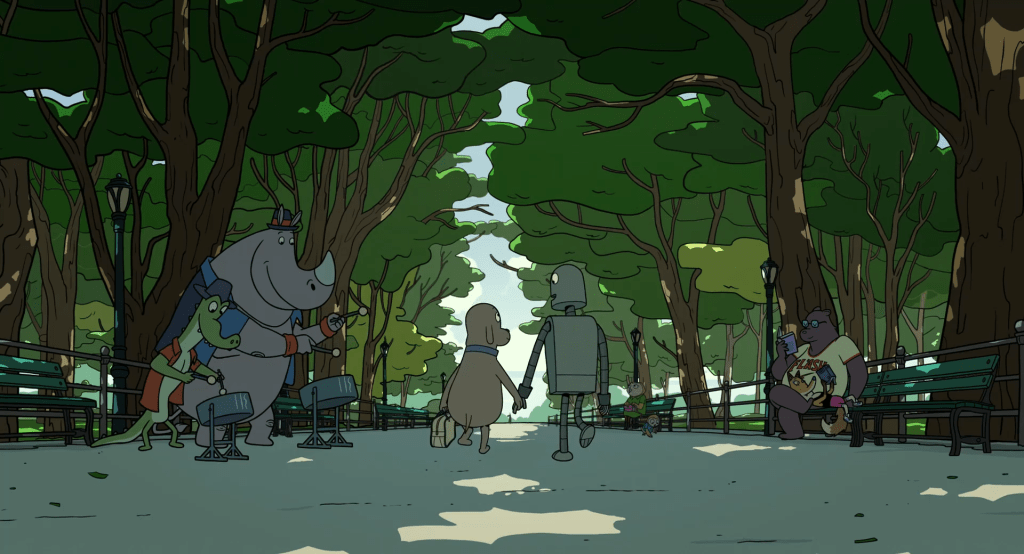
New York City, 1980s. Dog lives alone, bored. He sees his neighbors have partners and passerby have friends, while he plays a Pong-esque two-player videogame by himself; player 1’s controller in his left hand and player 2’s in his right. He sees an ad for a build-it-yourself robot and he smiles. He will finally have a friend. He orders by phone and it arrives. Dog smiles a lot more now and looks a lot less bored going out with Robot. They go to the beach, but after swimming all day, Dog finds that Robot has rusted stiff after a nap and can’t move. Dog tries several ways to carry Robot home only to find he’s too heavy, and eventually sorrowfully abandons Robot on the beach, but determined to find a way to rescue him when the beach reopens next summer.
So unfolds a story that, despite consisting entirely of anthropomorphic animals and containing zero dialog, manages to be more human and say more about friendship, guilt, and redemption than the majority of live-action movies with far bigger budgets.
Dog grapples with his remorse for leaving Robot with bouts of anger, seeking new friends, and thinking of Robot. Robot lays still while other animals encounter him and use his body for various purposes, while Robot dreams constantly of reuniting with Dog.
I could talk about the emotional heft of this film for ages. The tender portrayal of Dog and Robot, the cherished memories the images conjure, the adoration for friendships that endure through time, and that’s before getting to the technical aspects of the film, which are equally marvelous.
The animation is remarkably fluid, which speaks to director Pablo Berger’s insight and determination in hiring qualified and talented animators when he set up a couple of animation studio just to get this film made. He had been a fan of the graphic novel and after making live-action movies, decided the time was right for this.
I suppose I should admit that I was a huge fan of his 2012 silent film Blancanieves, an adaptation of Snow White that reimagines the titular heroine as a bullfighter, and his 2017 effort Abracadabra, a comedy-drama about a wife dealing with her husband who seems to have been possessed. I bought both blurays in 2017 and since then have been waiting for Pablo Berger’s next film. You’ll have to trust me that my elation at no longer having to wait does not cloud my judgment here. Robot Dreams is filmmaking excellence in every category you could critique a film.
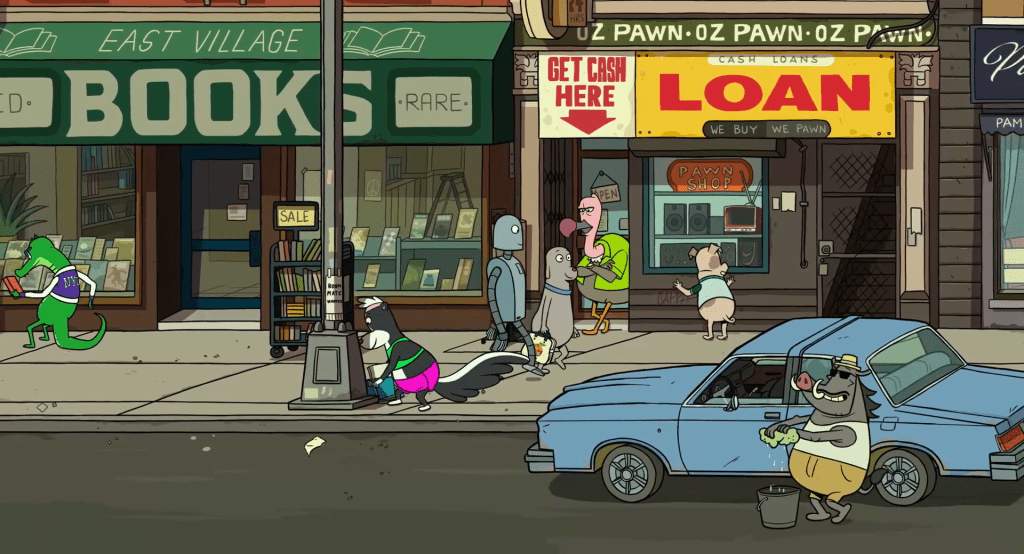
There are moments of attention to detail that lesser filmmakers and animators would not have bothered with. Dog’s tail wagging in moments of excitement and happiness, even when he’s in the background. Smiles creeping up on the faces of background characters as they interact with others. The Manhattan skyline, Central Park, props, clothes, all so well-thought out and executed. The plot is already so moving, but that the film could be so clearly a labor of love for everyone involved is touching.
And the sound design? As meticulous as the visuals. The soundtrack? I’m sure others have already mentioned that we’ve all heard “September” by Earth, Wind, and Fire many times over. But this film comes along and makes multiple uses of it; some fun, some bittersweet, that topples any other use of the song in a movie that has come before. I’ve said before that some films will entertain you and some films will change your life, and I hope I’m not just speaking for myself when I say I can see the images of Dog and Robot rollerskating to “September” in the park with a crowd of encouraging onlookers. That scene is a remarkable example of the things I’ve mentioned: attention to detail, emotional impact, sound, stellar animation. This film is several tours de force.
Dog’s new friendships always turn out unfulfilling but each for different reasons. Seasons change, others leave or have different expectations or are simply incompatible. But the motif is Dog desperately needing to compensate for Robot’s absence. Robot, meanwhile, continues to have dreams about reuniting with Dog, always with an underlying fear that he has been left behind and forgotten rising to the surface. If only they both knew how much the other thinks about them.
Some years ago, after a fresh breakup, a recently-divorced friend of mine remarked; everyone who enters your life will at some point exit your life. Whether it is death, drifting apart, falling out, or moving away. It is unavoidable. Yet still, acceptance doesn’t necessarily make moving on easier. Maybe because some people are irreplaceable, and you will always miss them. There are some people no longer in my life and I can assure you, no matter the time or distance or reason for their exit, I still miss them. How heavy this longing. Once you start thinking about it, you realize time may not decrease the burden. I think of one in particular who died young, before we finished high school. How heavy this grief. I wish those people were still around or alive so I could watch this movie with them. But there are happy memories, and I think back to another high school memory from senior year: Nada Surf. Matthew Caws titled their album “The Weight is a Gift” and sings about hope, growth, and other subject matter similar to Robot Dreams. I played that album on repeat when I got it. It was uplifting to hear not an embrace of melancholy, but an acceptance that it’s OK to be sad.
There is a constant optimism in our lives, and in Robot Dreams, to reunite, to reconnect… sometimes it doesn’t work out. Dog and Robot remain on each other’s minds the same way the people we miss can stay in our hearts, regardless of the reason for their exit. Maybe they think of us, too, the same way Robot dreams of seeing Dog again while whistling the chorus of “September” by Earth, Wind, and Fire. How wondrous this love.
An incredible cast, a great Taiwanese director, and remarkable production values from a co-production by heavyweights featuring HBO Asia, among many others. Unfortunately, it all let down by the absolutely incompetent storytelling decision to use dialog that is probably around 90% expository. Where did it all go wrong?
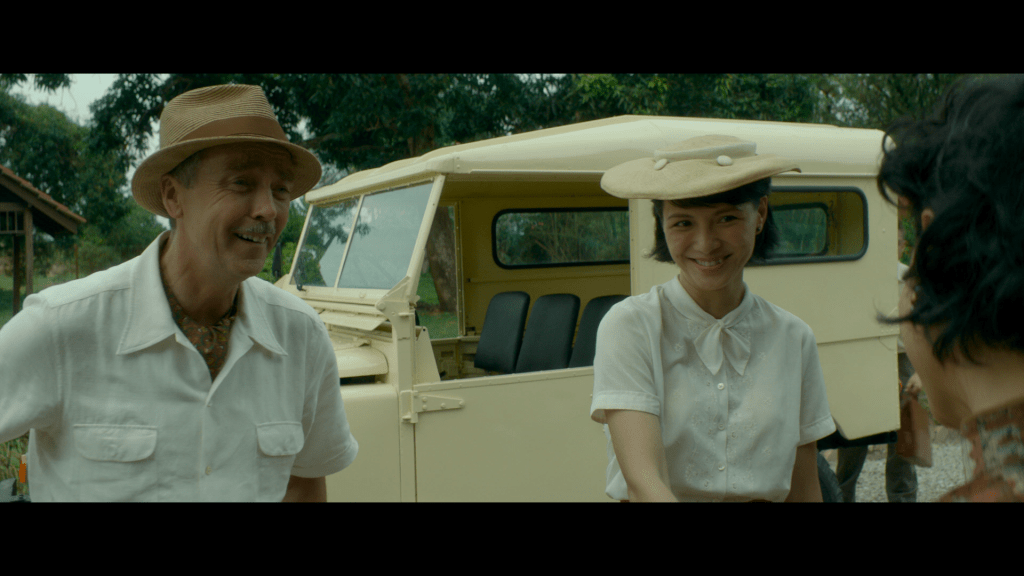
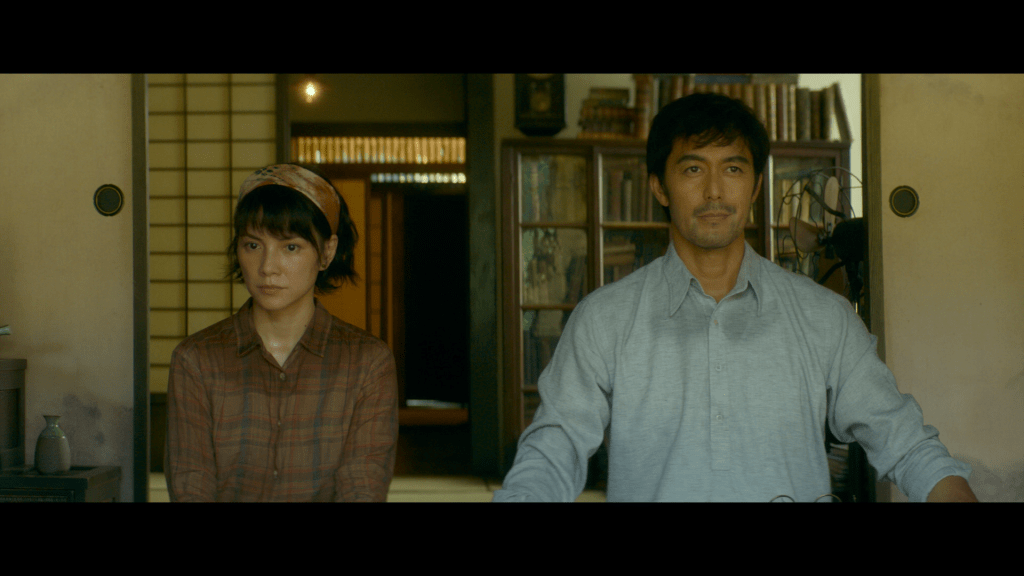
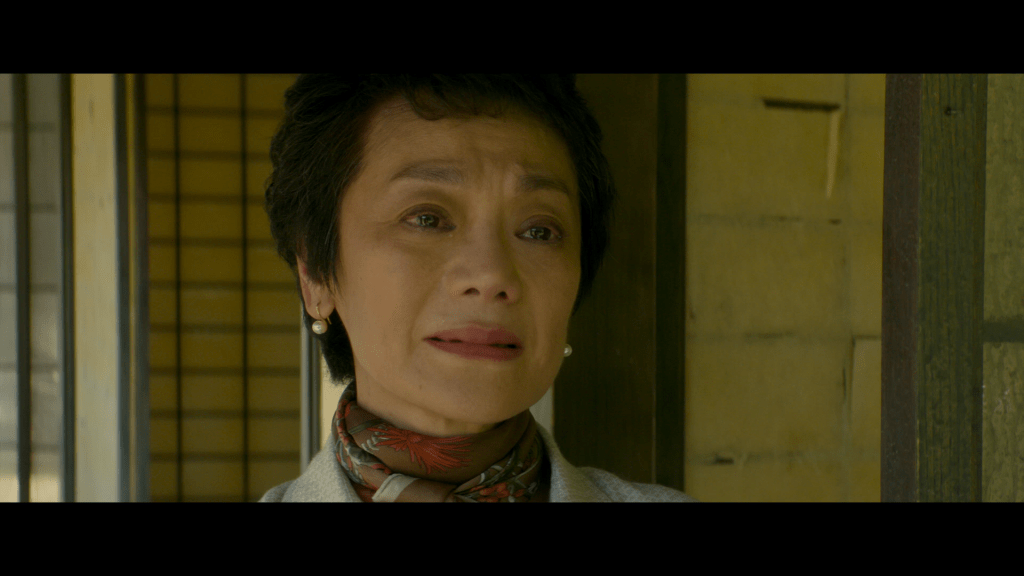
Sylvia Chang, Malaysia’s Angelica Lee or Lee Sinje if you prefer, Japan’s Abe Hiroshi, England’s Julian Sands, Scotland’s John Hannah, among many other stellar actors. If nothing else, the chemistry and prowess of these performers is worth watching, but still. I haven’t read Tan Twang Eng’s novel of the same title which the film is adapted from, but if the characters’ dialog was lifted stage from those pages, then I doubt I would ever be interested in reading it. Characters will explain their relationships with other characters just before or after a flashback that shows said relationship develop. Or worse, they will explain the significance of some event or location before or after that significance is depicted to the viewer. The characters might as well break the fourth wall and do comical asides while pointing to a map of the plot.
How Tom Lin went this direction embracing so much telling instead of showing I do not understand, as he was previously responsible for Winds of September, Starry Starry Night, and Zinnia Flower; all remarkably original and incredible Taiwaneses films. This was boneheaded decision making writ-large and it scuttles any potential gravitas the film could offer, which is such a shame and disappointment because there are so many other positive attributes of the film to recommend besides.
Set and filmed mostly in the Cameron Highlands of Malaysia during the Malayan Emergency, the story spans several decades and follows a woman, Yun Ling, who escaped from a Japanese internment camp where the Imperial Japanese Army committed daily atrocities. When the Japanese occupied the British Malaya, the Imperial Japanese Army took Yun Ling’s sister as a comfort woman before eventually slaughtering all the prisoners and comfort women before retreating, except for Yun Ling, held in solitary confinement and forgotten about. Older now, Yun Ling is a lawyer in charge of prosecuting war crimes, with particular interest paid to Japanese soldiers, and during this work would come to apprentice under Japanese gardener Nakamura Aritomo, with a complicated romantic relationship to follow, as Yun Ling had originally sought his help to build a garden in memory of her deceased sister’s wishes.
In the present day, Nakamura is suspected of being a spy, and older Yun Ling is on the path to becoming a judge but is forced to confront her memories and buried mysteries, including one connected to Nakamura that could potentially threaten her career. I hope I’ve explained all this in a way that isn’t confusing.
It’s an intriguing, gripping, complex narrative with story beats that are genuinely moving and intense. This is, despite my complaints about the dialog, a well-made film. It is by no means a slouch in any filmmaking departments. The soundtrack isn’t overblown, there isn’t a milking or manipulating of emotional moments, there’s no overacting, so honestly the only downside is the dialog. I don’t want to single anyone out, but the screenplay by Richard Smith may have been simply been a matter of talent being stretched too thin. A multi-decade arc that nearly approaches the scale of an epic is a lot to handle, and again as I haven’t read the novel I don’t know how close the script adheres to the prose, but I felt the amount of exposition rivals anime made for children. That can’t be the film’s target audience, as this is a movie that deals with complicated historical events, comfort women, and war crimes, so whatever the reason was for the dialog choices, I don’t know. On the other hand, considering that was the only disappointing aspect of the film, you could do a lot worse. It is, at the very least, a commendable effort.
The Garden of Evening Mists 3.5/5 Blu-ray Disc from Panorama HK
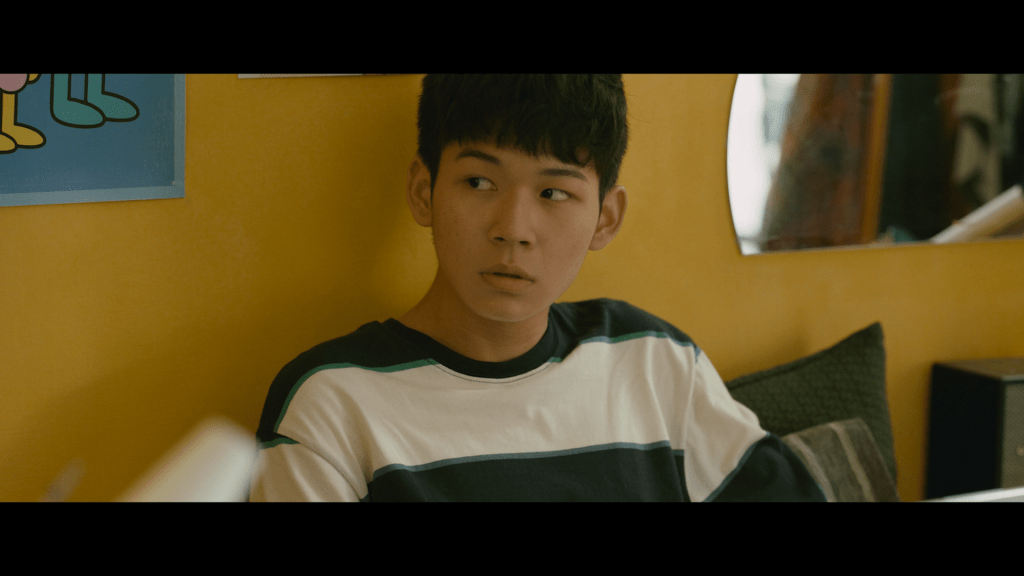
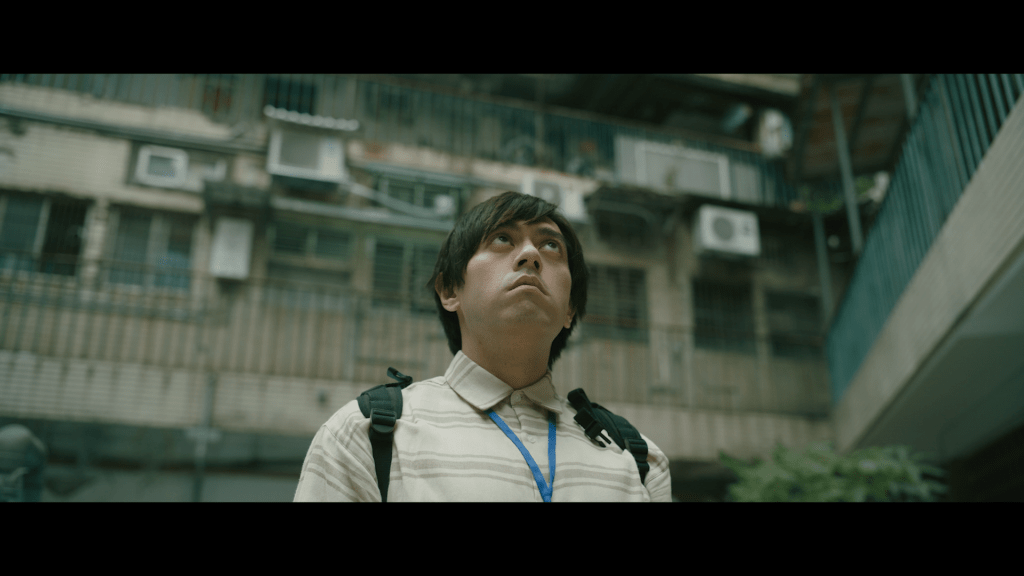
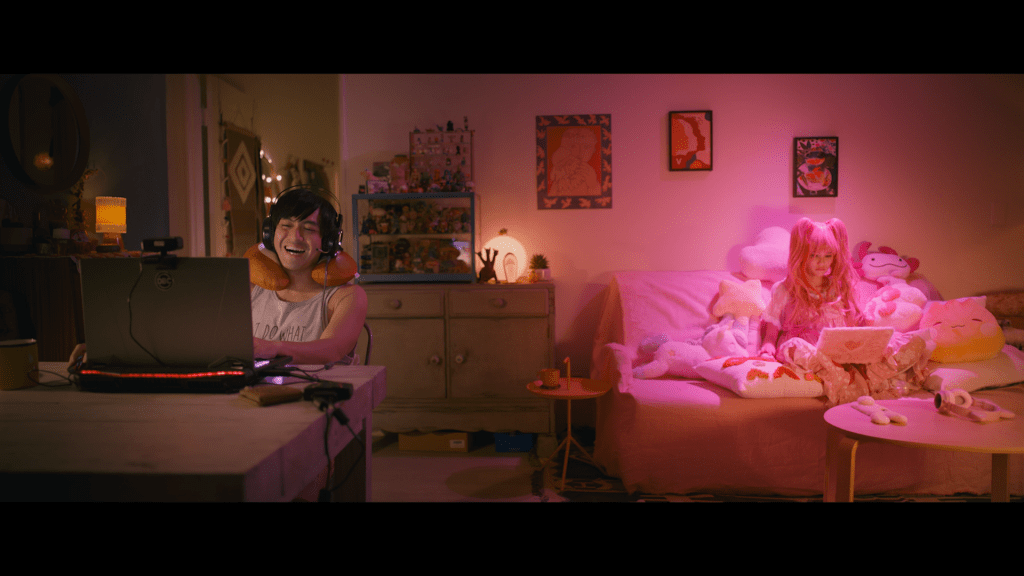
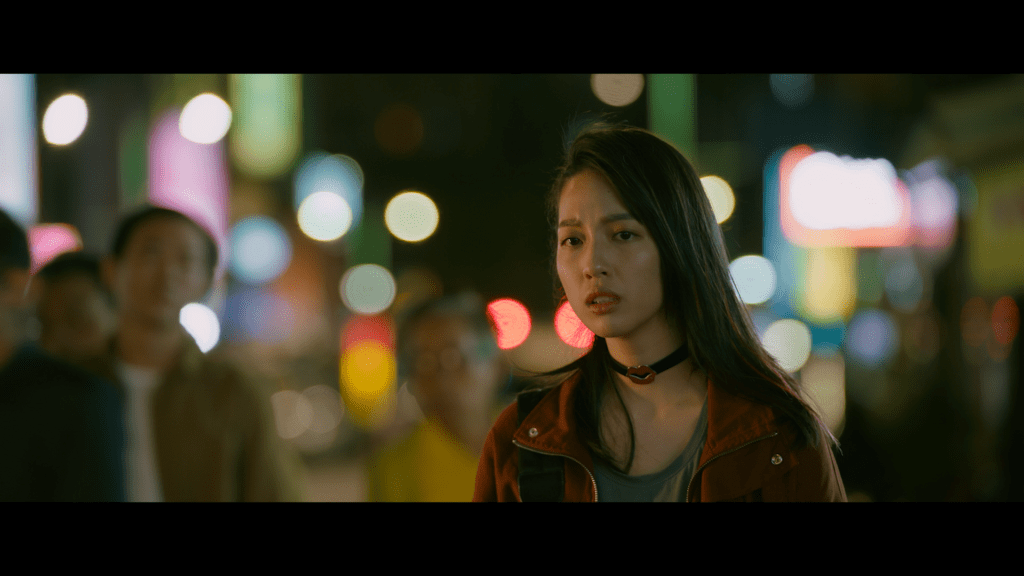
Six people affected differently by the same effect; a mass shooting at a night market. The shooter, his friend, a victim, the victim’s fiancée, a journalist, and a witness. Where to start?
Taiwanese cinema has long explored bleak depictions of working and middle class urban lives, and since the New Taiwan Cinema there has also been a persistent strain of hopefulness, so here is Goddamned Asura. Is the film about the mass shooting, per se? No. It’s about the lives these people have led and the paths they are set on. Can they change the track? Is it fate? Is there a point in trying to answer these questions?
The film is a display of technical excellence. Lighting and color timing are utilized effectively and subtly, which isn’t always common in films no matter their country of origin. The sound design is balanced and quiet, but emphasizes discomforting tones to signify the characters’ pain. The use of drones was interesting, as that’s a technique more common to horror films, and it’s always interesting to see the blending of tools from different genres. The writing is flawless. No exposition, just characters speaking to each other the way real people speak to each other, and the words left for the viewer to ponder. Perhaps not so surprising given the quality of Taiwanese films outside of popular genres, but it’s still nice to see a film that doesn’t reduce itself to tropes and simplistic messaging for the sake of viewers’ desire for accessibility.
What struck me about the characters is that the use of stock characters and archetypes are eschewed in favor of realism. Yes, the civil servant is kind of a nerdy gamer, but he’s also engaged and comes from Taiwanese Aboriginal background. The shooter isn’t bullied and abused, but he does struggle to be validated by his family. The witness has a seemingly normal life aside from a typical but not overly dysfunctional single parent home, and has the kind of street connections a person would develop if they grew up trying to avoid spending time at all.
I feel maybe my writing is too vague here, but I’m trying not to spoil anything. I could possibly be rusty from not having done this for a while. The aftermath of the shooting and the second half of the film delve deeply into the question of “what if?” Its a reflective film, using a tragic event to show how different people handle grief. If they handle it at all. So if the movie isn’t about the mass shooting that is central to its plot, what is it about?
Love, I guess.
5/5 Taiwan Blu-ray Disc from Deltamac Taiwan Co. Ltd
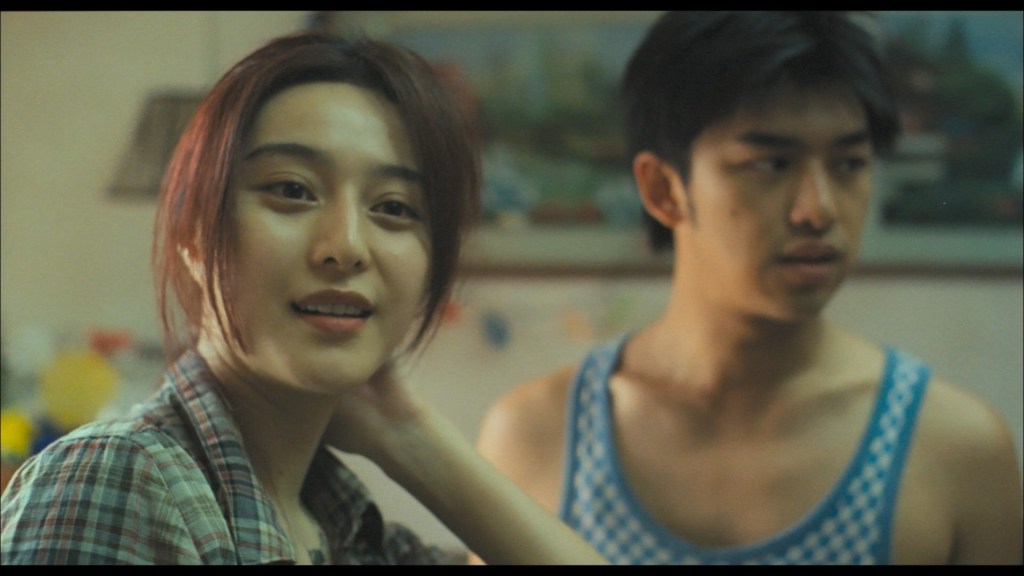
A senior citizen opera singer (played by Sylvia Chang in a heartwarming but devastating flourish) is frustrated by the push for increasingly younger singers who disregard her teaching and direction. Elsewhere, three teenagers (Fan Bingbing, Chen Bolin, Fei Long) resist the pressure to sit for university exams and instead opt to stick together through their admittedly aimless lives. Their bonds of friendship, while tested, are nigh unbreakable and eventually after leaving home they find their way to the opera singer, accepting an offer to rent her spare bedrooms. Broken people meeting broken people and gradually realizing they want to help each other, despite their initial dislike of each other.
For the 10th anniversary of the release of Li Yu’s film Buddha Mountain, New York-based Cheng Cheng Films has been kind enough to distribute the director’s cut of the film for U.S. audiences. Of all the cinema in modern China, Li Yu is one whom I would consider essential, on par with Jia Zhangke, Lu Chuan, and Lou Ye. Cheng Cheng Films have gone the extra mile and also released Li Yu’s latest film, 2015’s Ever Since We Love.
I first saw Buddha Mountain when I imported the Blu-ray after it was released in Hong Kong in 2011. My impression of the movie has not changed since then. Chinese independent cinema is worlds apart from Chinese commercial cinema, and Buddha Mountain remains, 10 years later, not just a showcase of a strikingly austere and sincere work, but Li Yu’s astute craftsmanship as well.
Note: my experience with the film has always been limited to the international cut, which is what was originally released in HK and what Cheng Cheng Films has released as the director’s cut. The release in China was apparently censored and contains several edits.
The film is mostly quite understated, and never gets bombastic. There is a delicate touch of melodrama with the characters’ emotional outpourings, but the histrionic overacting and overblown soundtracks typical of mainstream Sino cinema are absent. Li Yu has been very careful to paint her characters with shades of grey, and we observe their growth, emotional fractures, and bonds over time. Of course, a film isn’t just what it’s about, but how it’s about it. How the characters grow, how they bicker, how they strengthen their ties, nothing is shortchanged for the sake of banal elements. Everyone has a trauma they’re dealing with, whether it’s a dysfunctional family grief, debt, bullying. It’s a motif that’s explored for each character without being hammered and establishes the humanist outlook of the film. Buddha Mountain couldn’t possibly have been any better.
There was a lot of great music released last year, and already a slew of great releases lined up for 2022; Aldous Harding, Big Thief, and Jenny Hval on 4AD, Black Country, New Road’s 2nd LP with Ninja Tune, and Lucky Lo’s upcoming debut on Danish stalwart label Tambourhinocerous. Not to mention we already got Bonobo’s new album Fragments also on Ninja Tune, but I digress.
I’m only going to cover a handful, so without further ado…
Holy shit, what a debut. A friend hipped me to this and since hearing it after I already posted my favorite albums list on Facebook, I regret this not topping the list because I’ve had it on repeat for several days. She’s Gone, Decide, and Silence is Golden are a series of wonderful, in your face rockers with nonstop hooks, but the songwriting here deserves a place in the indie rock pantheon. Speed Reader stands toe-to-toe with some of the best writing by the Replacements, Sunny Day Real Estate, early Weezer, you name it. These guys will go pound-for-pound against any of the greats and come out not too shabby at all.
I read somewhere that some of the lyrics on this album came from Lucy Dacus’ diary when she was in high school, and all I can say is I wish I could have written songs like First Time when I was 14. “Broke into the screened-in porch/Now I’m crawling through the dog door/I may let you see me on my knees/But you’ll never see me on all fours” That’s brilliant. Not to mention Hot & Heavy which is equally heartbreaking and uplifting in its tenderness and beauty.
This was by far the most pleasant surprise of 2021 for me. I don’t even remember how I came across this on Instagram, it was either a sponsored post or I was accidentally tagged in something and I wound up on Margo Ross’ page and it turned out she was gearing to release her debut album. I have to say this totally worked out in my favor; Ross is an accomplished folk musician, lyricist, and singer. She makes use of these exasperated sighs as part of her delivery that really drive home the emotion she puts into her songs, and I could listen to her banjo playing all day.
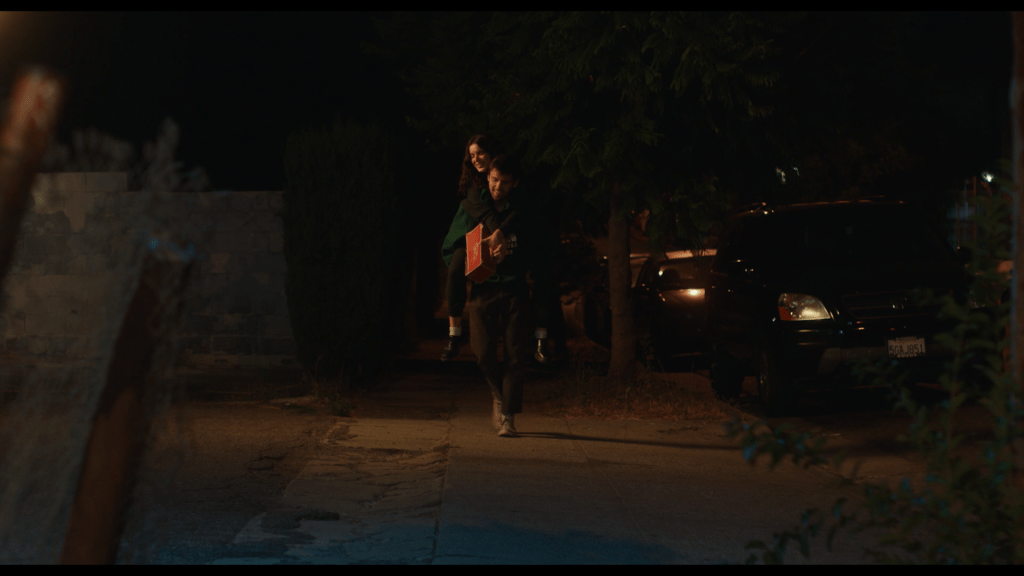
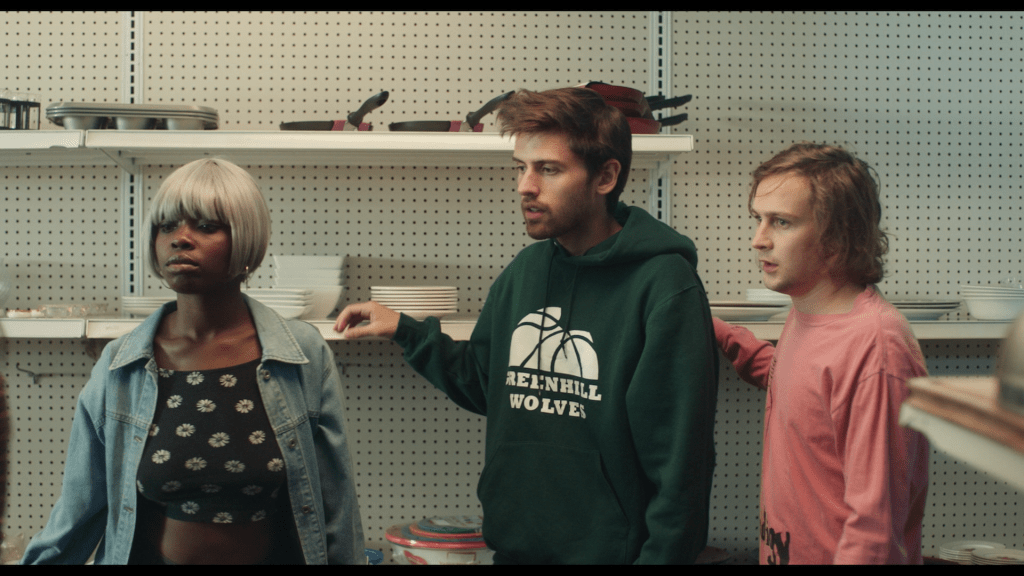
Writer, director, and editor Cooper Raiff’s coming-of-age dramedy about a 19-year old struggling to adapt to college life seems like a series of red flags; unassuming male protagonist, possibly creepy behavior as romance, stoner roommate, and whatever else you might be tired of seeing in indie and mainstream features about young adults in college. Surely IFC Films would know better than to bother with this tripe. A glance at the trailer, however, reveals a pleasantly surprising poignancy and intimacy from a cast and crew who all have a lot of heart. Considering the conception and completion of the film took place while Cooper Raiff was all of 23-years old, Shithouse is a remarkable feat.
Developed from Raiff’s semi-autobiographical script that was originally made into a short, Shithouse offers a captivating amount of insight into the lives of its characters and a compelling exploration of their emotional development and vulnerability. Much of the value in this motion picture stems from its earnestness, a rare quality in American cinema today apart from the likes of screenwriter-directors Kelly Reichhardt, Andrew Bujalski, Larry Fessenden, Sean Baker, and a handful of others. An earnest film gets far more mileage over mere entertainment value for me.
Alex Malmquist is from Dallas, TX and has moved into his dorm at college in California, where he has zero friends. He and his roommate hate each other. His resident advisor, Maggie Hill, is also 19 but appears to have adjusted to the expectations of college life with the typical cycle of binge drinking, casual sex, and emotional unavailability. Their interaction begins when Alex is locked out of his room after a shower but they only get to know each other after Alex chooses to sleep in the common area after a party at the titular location, due to his roommate Sam drunkenly shitting himself whilst sleeping on the dorm room floor. Alex and Maggie awkwardly attempt sex before bonding through conversations about each other and their backgrounds. When morning comes, Maggie is distant and dismissive which leaves Alex confused and hurt but resolved to be on friendly terms.
Contrary to appearances, this isn’t a film where a female character is supposed to be flattered to be an object of affection. In fact, it’s a stretch to consider her a love interest at first. Alex is lonely and simply desperate to hang on to the first relationship he has built with someone whilst he is away from home for the first time. There are so many things that could have gone wrong with this narrative, but film refuses to drop the ball. It handles all the characters as complex, motivated, and multidimensional. Alex, Sam, and Maggie are all shown to be coping with their loneliness and insecurities in their own ways, but the film smartly doesn’t revel in this as some sort of grandiose revelation; it’s a simple fact of life because that’s how people are.
OK sure, Alex does like a ton of Maggie’s photos on Instagram and sends her numerous messages. But not once does he act possessive towards her nor does he project his view of their interactions onto her. He’s touched and left impressed by their time together, and hopeful that he has finally gained a friend. She, on the other hand, assumed the night was little more than drunken fun with no meaning or significance to her life, lest the natural conclusion be a romantic relationship which she assumes to be Alex’s intention. Their wires get crossed and the eventual confrontation is inevitable given their different family backgrounds and levels of self-awareness. That the characters come together again the way they do is a beautiful moment and one of the film’s tender scenes that could have been overly sentimental but is instead moving and cathartic.
Shithouse has a gracefulness to its proceedings that it is steeped in subtlety and astuteness. The dialog doesn’t have the showy air of “screenwriting” common with new filmmakers intent on showing you how smart they are; a lot of it is awkward and playful the way freshman and sophomore college students would be. More than anything, its charm lies in its frank attitude and minimalism. Alex is shown multiple times crying while on the phone with family, a pretty wondrous feat given depictions of masculinity in American pop culture. A 19-year old male is crying because he misses his parents and siblings several states away and it’s not meant to be ridiculed or imply weakness or failure, he just loves his family. How did it take this long for filmmakers in this country to grapple with reality in that way? Another aspect to win me over was that when Alex criticizes Maggie for her carefree approach to sex, he doesn’t demean or degrade her, instead he questions how she can reconcile her nightly routine with her desire to find out who she is like she said she wanted to do. There’s a moment where Sam encourages Alex to step outside of his comfort zone, and the essence of the film is in that line. Sam gets high and drunk to stay in his comfort zone, Maggie is afraid of romantic and artistic rejection, and Alex calls his family nearly every day to feel a sense of security. There is no deus ex machina to fix their shortcomings, which they don’t realize they have until they open up to each other. A film with this many opportunities to be run of the mill but instead chooses to go off the beaten path isn’t just daring, it’s an important work.
Several pieces on the soundtrack are original scores by independent artist 0fret. The instrumentals become motifs of sorts and are heard prominently at several points. There is also a song by Waxahatchee heard, but for the most part the film is a quiet affair. Whether it was because of the limited budget, or Cooper Raiff wanting to concentrate on his storytelling, it was the right move.
Cinematographer Rachel Klein really nailed the nighttime photography, and a bulk of the film’s events occur at night and outdoors. A number of wide shots go against the grain by showing characters together, and the closeup shots are utilized when they’re isolated. I don’t know if every technical aspect of the film was planned or resulted from happy accidents, but plenty of people behind the scenes here managed to make a lot of smart moves and have proven their artistic credibility and know-how. The supporting cast as well could have just been throwaway parts to help develop the protagonists, but they all contribute their own personas and qualities. Big budget features are still not casting actors of color either because of claims that there aren’t many to be found or because audiences abroad will reject them, but a movie by a first-time filmmaker shooting on a $15k budget somehow finds three black actors and gives them not only important roles but also makes them central to the plot and/or subplots instead of stereotypical variations of the help. Raiff and co. haven’t just showcased their talent, they’ve shown that everyone else is making excuses like incompetent assholes do.
It may not be a film that expands our understanding of humanity the way Bresson or Tarkovsky would have made, but it’s generous with its empathy and patience, and that’s the next best thing. I could argue that more filmmakers should follow Cooper Raiff’s lead, but then the fact that they don’t is why Shithouse is such a wonderful picture. Whatever he’s planning next, I’m waiting and definitely watching.
Shithouse 99 minutes 2020 Written & Directed by Cooper Raiff Cinematography by Rachel Klein Distributed by IFC Films
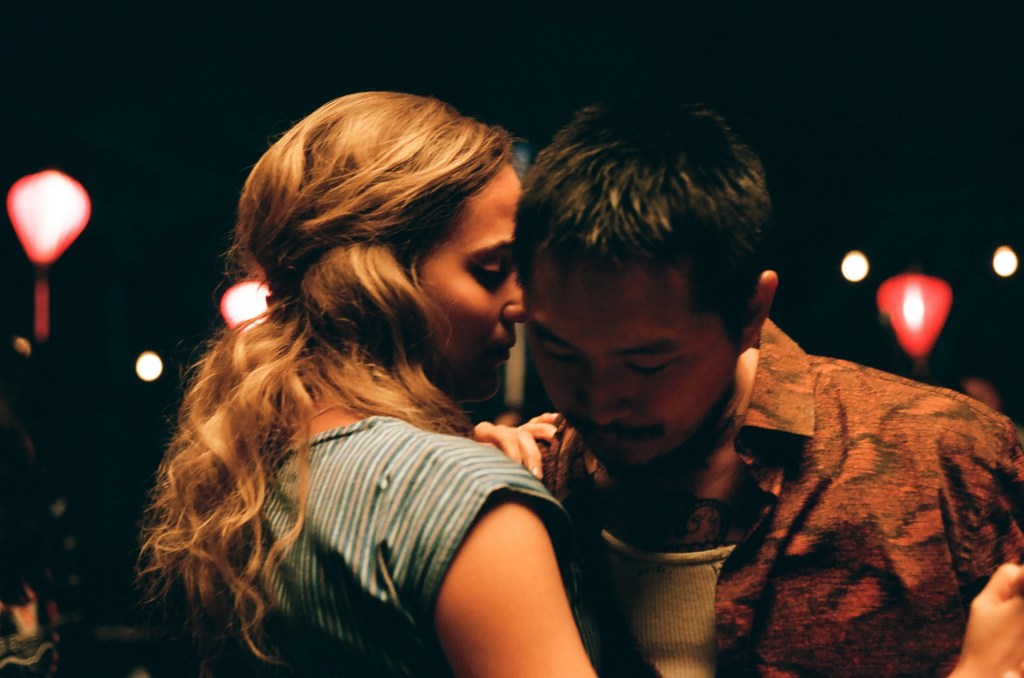
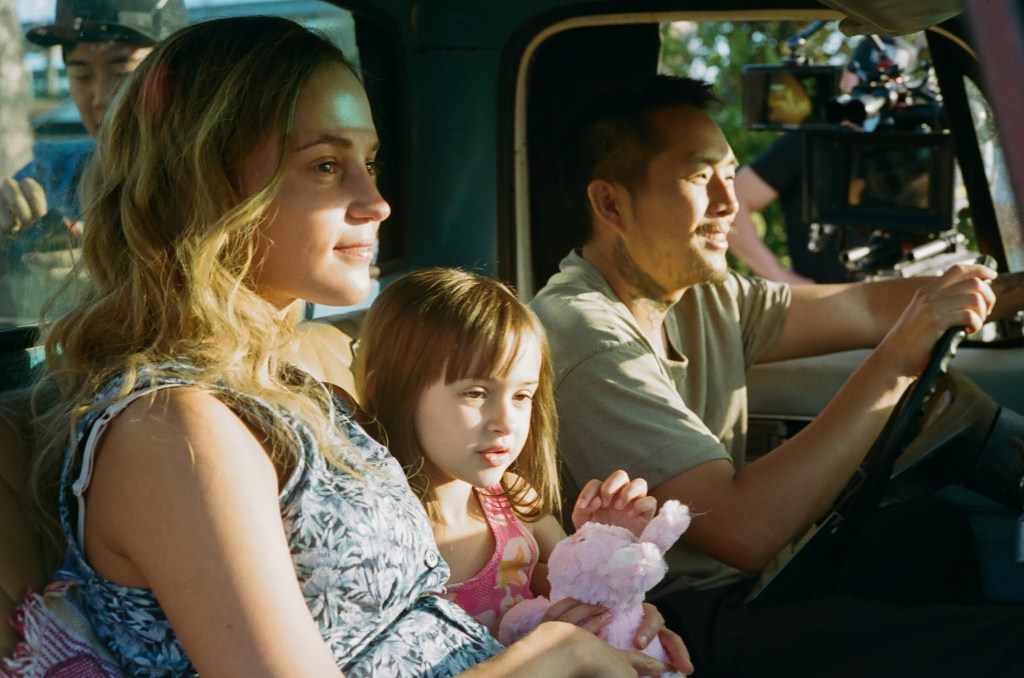
Alicia Vikander (left) stars as “Kathy” and Justin Chon (right) stars as “Antonio” in BLUE BAYOU, a Focus Features release. Credit : Focus Features
Justin Chon’s 3rd feature-length outing as writer/director is an assured, confident mix of family drama, crime drama, and social commentary. Telling the story a 33-year old Korean adoptee who was brought to the US as an infant, our protagonist finds himself to have never been granted citizenship despite living in Louisiana for 30 years. What follows are a series of injustices, bad decisions, and chance encounters that cascade like falling dominoes. There is a quiet tenderness found in the gentle scenes of domestic life which is continuously juxtaposed with a raw intensity in the louder, more dynamic scenes of arguments and fights; it is masterfully executed and pairs well with the alternating between a laser-guided focus on LeBlanc’s family life and the grander scope of the systemic injustices foreign adoptees face when they come of age in the US.
(L to R) Sydney Kowalske as “Jessie”, Justin Chon as “Antonio” and Alicia Vikander as “Kathy” in BLUE BAYOU, a Focus Features release. Credit : Focus Features
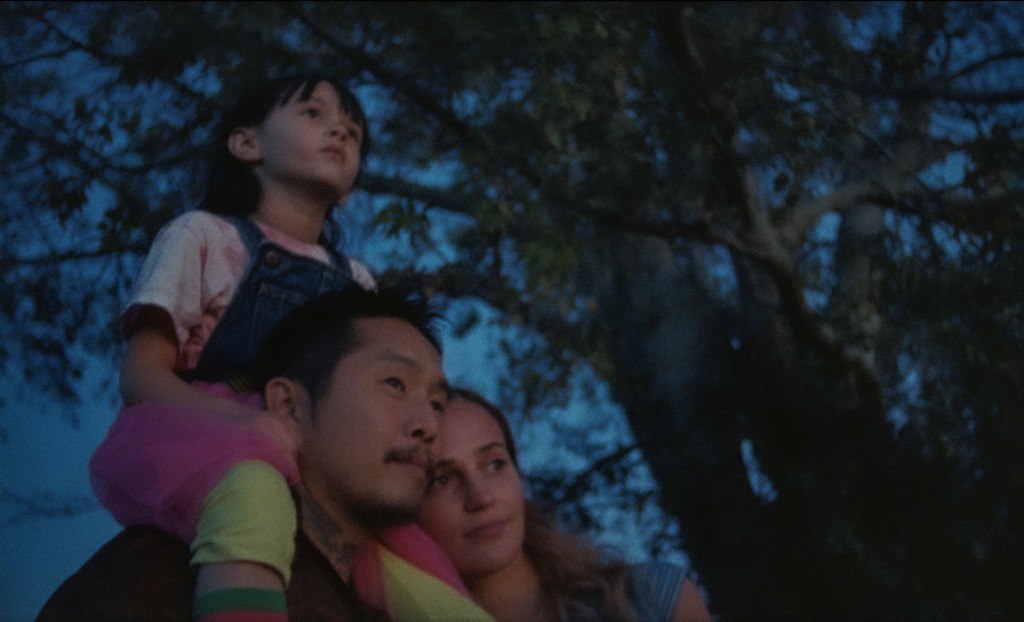
When we meet tattoo artist Antonio LeBlanc, he is applying for a 2nd job at a mechanic shop. He speaks with a Louisiana accent, but still endures the racist microaggression of being asked “Where you are from?” because he’s Asian. This is coupled with suspicion cast on him due to his felony record, and he is turned away. What follows is the unraveling of a family man’s life after an encounter with police in a grocery store; he and his wife Kathy (Alicia Vikander) are arguing over expensive vacation plans when they are overheard by a couple of police, one of whom is Ace (Mark O’Brien), the father of Kathy’s daughter (now Antonio’s stepdaughter) Jessie (child actress Sydney Kowalske). Ace was a deadbeat who ran out on Kathy and Jessie, and is implied to have abused his daughter. Ace’s partner Denny (Emory Cohen is an excellent performance) is your typical corrupt police officer; Antonio’s troubles begin because of Denny’s beating and arrest of Antonio for perceived “contempt of cop” due to Antonio’s refusal to address Denny as “sir.” Unfortunately, this is a very true-to-life depiction of police encounters in the United States, and it’s one of many realistic moments the film absolutely nails.
You would be forgiven for mistaking Justin Chon’s performance as neorealist, as he and others in the lead cast have the New Orleans accent down. The main cast are all from either up north, Canada, Sweden, and in Lin Dan Pham’s case, Vietnam/France. Chon himself is probably the one with origins closest to Louisiana, being from California. The supporting cast, however, is seemingly all NOLA natives and it boosts the already surprising authenticity and credibility of the film. Martin Bats Bradford appears as Lajon, one of Antonio’s associates from his motorcycle stealing crew. The standout, however, is LeBlanc’s friend Quentin, played by Altonio Jackson, who previously had his breakout role on HBO’s 4-season series Treme. While Antonio’s friends all trade-off on the comic relief, Quentin exudes a warm presence and backs up Antonio constantly, which given Q’s familiarity with Jessie, suggests that he has perhaps known Antonio the longest and is his closest friend.
Justin Chon (left) stars as “Antonio” and Alicia Vikander (right) stars as “Kathy” in BLUE BAYOU, a Focus Features release. Credit : Focus Features
While Justin Chon leans on melodrama for certain scenes, it is never excessive to the point of milking audience emotion as found in usual formulaic Hollywood movies. The characters are complex, especially Antonio with his criminal record. There are less than a handful of arguably questionable creative decisions; recurring visions of LeBlanc’s mother by a river, the soaring music when LeBlanc finds himself underwater, and the sustained closeup of Kathy singing “Blue Bayou” during a long take, but other than the visions of LeBlanc’s birth mother, none detract from the realism and urgency which anchor the plot. A great use of subversion is Toby Vitrano’s character Merk, an agent for Immigration and Customs Enforcement whose intimidating physique and referrals to his targets as “bad guys” sets up some nasty expectations, but this is a movie that is earnest rather than entertaining. Maybe some viewers will find that twist convenient, but even Erwin Rommel managed to be a halfway decent Nazi. Despite ICE’s penchant for running concentration camps, sexually abusing migrant children, and forcibly sterilizing migrant mothers, Merk’s sympathetic treatment of LeBlanc feels real considering Merk is a repeat customer of LeBlanc’s tattoo services. For me personally, earnestness goes a long way for films. Justin Chon clearly believes Korean adoptees facing deportation needed their stories told, and it is this humanitarian concern that propels and underpins the story.
One thing the script does very well is avoid expanding the scope too far when dealing with LeBlanc’s situation. Rather than further his development through meeting another adoptee facing deportation, it is Parker, a kind Vietnamese woman (played by Lin Dahn Pham) who arrived with her father as refugees after the war. She is dying of cancer, and their shared moments have a profound impact on him. Despite LeBlanc suffering multiple incidents of police abuse, Chon made the smart decision to not involve a lawsuit subplot which would have made for a different film entirely. Ace, Denny and the stoic ICE agents just following orders are representing a national problem, but the emotional power of confronting this is enhanced by centering on one person’s struggle with these institutions. It would be difficult to show how police unions release statements encouraging police departments to act as death squads carrying out daily extrajudicial killings, and their lobbying for impunity from legal repercussions when police break the law as well as campaigning against relaxing punitive measures for victimless crimes such as marijuana possession. This would have inevitably turned into a courtroom drama and it functions far better by limiting this aspect, although Vondie Curtis-Hall as stern but caring attorney Barry Boucher keeps the trial discussions engaging with his quick thinking and resourceful planning.
Sydney Kowalske (left) stars as “Jessie” and Justin Chon (right) stars as “Antonio” in BLUE BAYOU, a Focus Features release. Credit : Focus Features
Shot on 16mm film, the image quality is beautiful. For the film buffs out there, there are a few scenes where you’ll see a visible film hair curled into the frame, particularly in the shot at the bayou when Antonio points out Spanish mosh to Jessie, but that’s the nature of film. It’s not a distraction or bothersome, or at least shouldn’t be if you know what film is and how film works. The lighting is superb and consistently even, especially during the nighttime scenes. It looks like the work was finished on a digital intermediate, because there is clarity and fine detail visible underneath the grain, which was thankfully not washed away through the use of digital noise reduction or edge enhancement. Cinematographers Matthew Chuang and Ante Cheng deserve an award for the camerawork here. Editing by Reynolds Barney excels at balancing shot lengths but might test the patience of commercially-minded audiences.
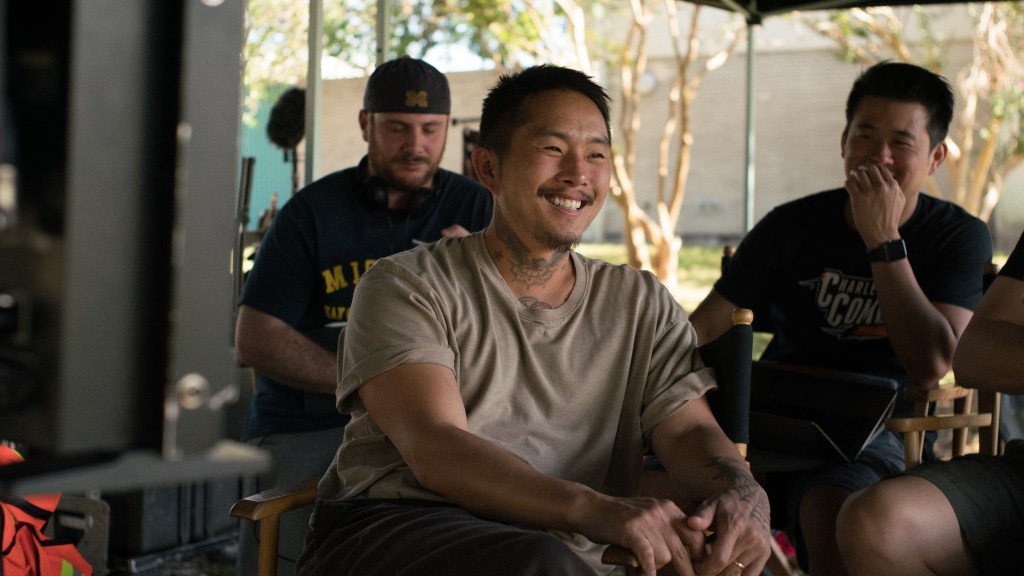
(L to R) Actor Alicia Vikander, actor Sydney Kowalske and actor/writer/director Justin Chon on the set of BLUE BAYOU, a Focus Features release. Credit : Focus Features
Sound design is mostly understated aside from the pivotal scenes that usually involve domestic arguments, LeBlanc speeding on his motorcycle, and tense meetings between the LeBlancs and Ace about custody of Jessie. Fittingly for a movie set in NOLA, music is essential at certain points. The first song played is by Big Freedia when Antonio rides his motorcycle after being rejected by the mech shop, and it sets a standard of great song choices throughout the film. Even in the aforementioned underwater scene, the orchestral score isn’t necessarily cliché, but it is a bit too loud, but that could be my distaste for the volume in theaters.
Director/writer/actor Justin Chon on the set of BLUE BAYOU, a Focus Features release. Credit : Ante Cheng / Matthew Chuang / Focus Features
Justin Chon was wise to not sugarcoat the real-life stories he based his script on. The film ends with snapshots and details of Korean adoptees who were deported as adults despite being brought to the US as children, with Antonio mentioning the abuse he suffered from his adoptive father that other adults enabled. That kind of maltreatment is a recurring theme in many foreign adoptees’ lives such as Monte Haines, who is the first deported adoptee featured at the end. The film unfortunately would have been too long if it devoted time to the issue of faith-based adoption agencies enabling this abuse. Many of these agencies would only adopt to church-going families. Children were often physically and sexually abused and complaints were either not investigated or children were simply shuffled around to other unfit homes. The whole time, no one responsible for the children was filling the proper paperwork for the children’s citizenship, which is why now to this day ICE is deporting adult adoptees to countries they left as 2-year olds, and consequently have no grasp of the culture or language. Naturally, rather than investigate the adoptive parents for neglect, the solution we’ve found is to wait for the children to grow up and then punish them for their parents’ failure to properly care for them. The stoic faces of the ICE agents in the film are a chilling reminder of this inhumane approach to immigration and border policies in the US. That Justin Chon was willing to take this project on, and produce such an honest film about it, is commendable. Blue Bayou is a near-perfect film with plenty of heart.
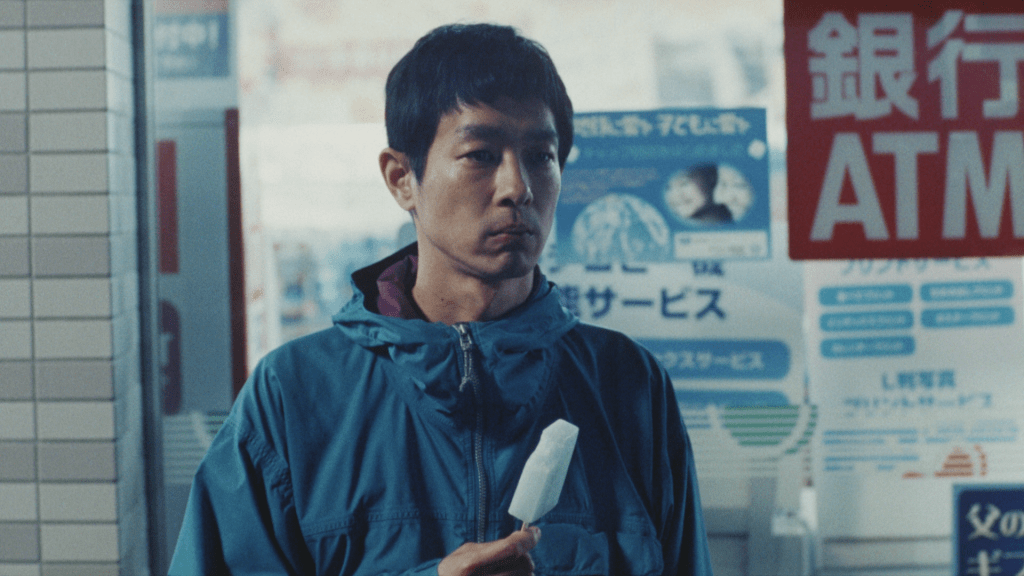
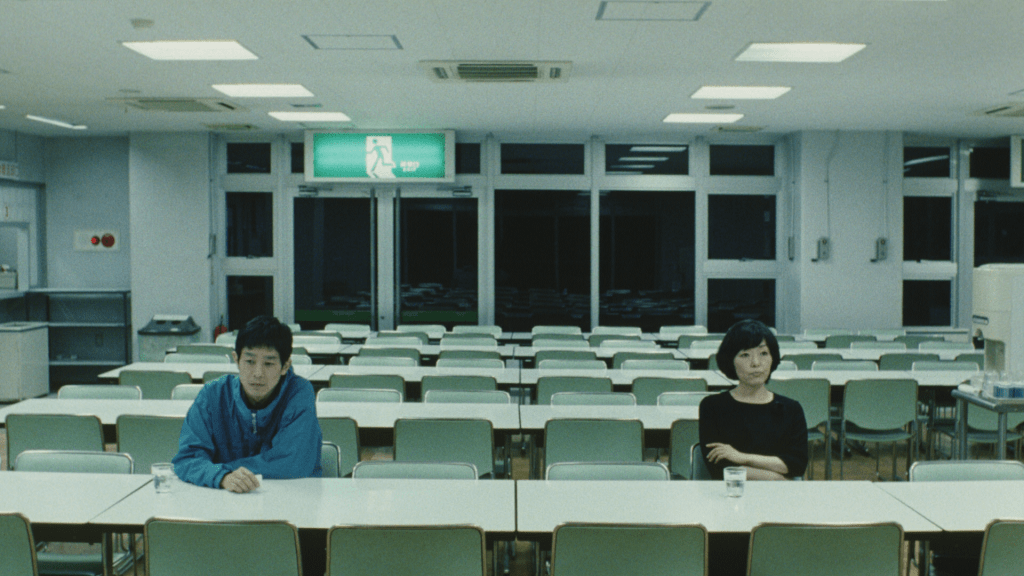
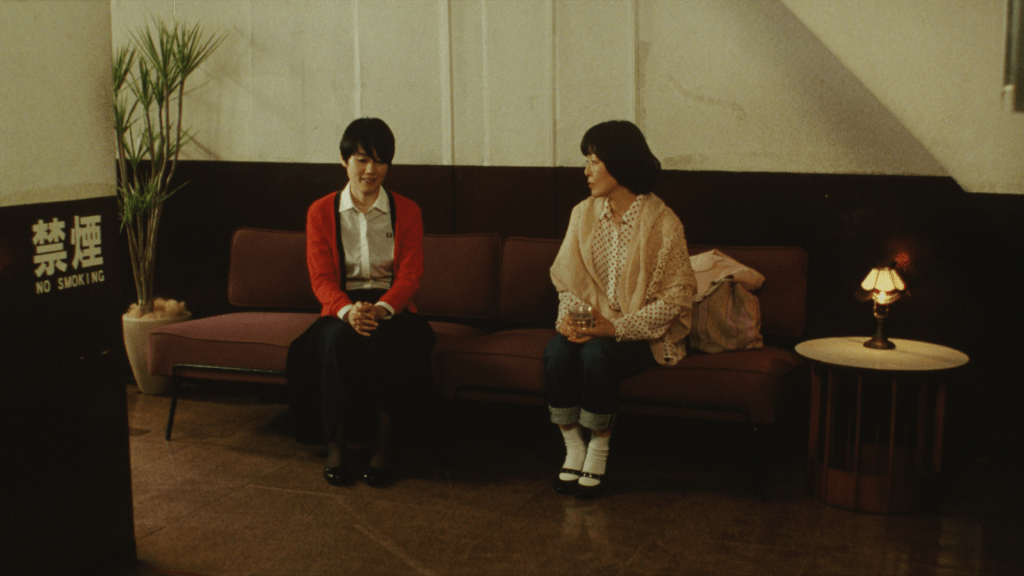
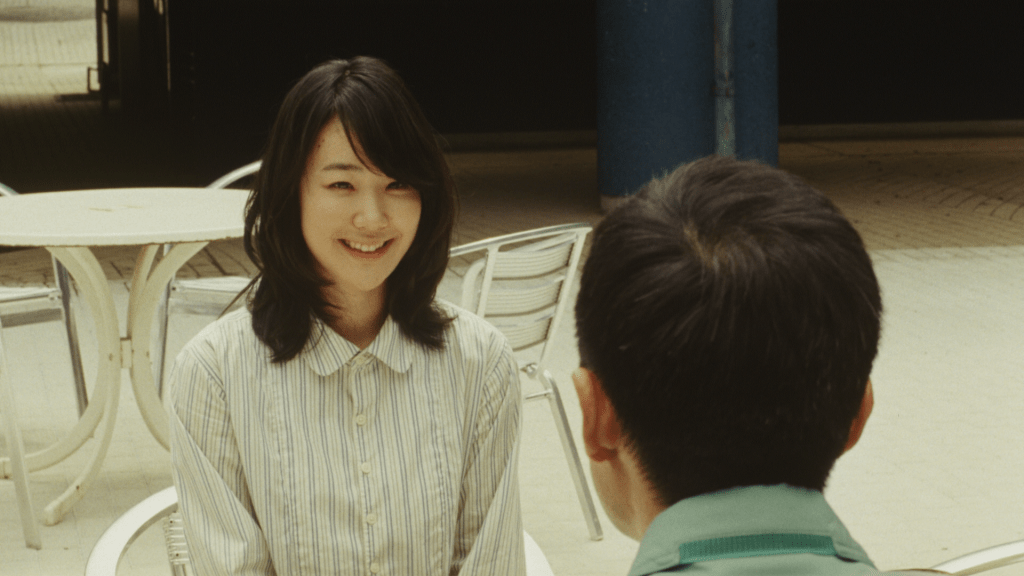
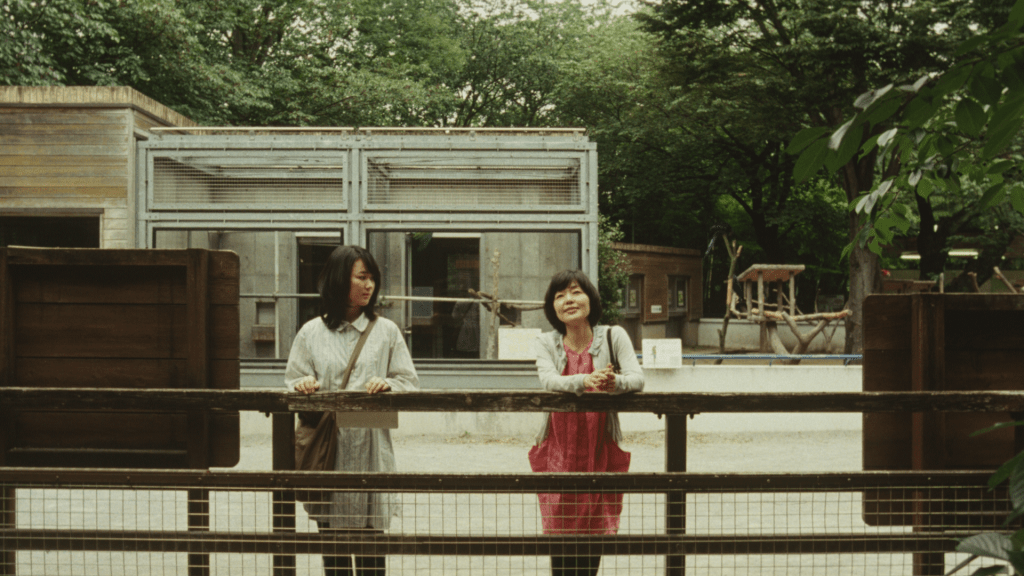
Writer/director Matsumoto Kana’s brilliant follow-up to her equally brilliant Mother Water (マザーウォーター) follows the actress Touko, portrayed by Kobayashi Satomi, who hitchhikes into the Tokyo night, encountering random people she connects with over the next two days. The first, Nagano (Kase Ryo, whom I have yet to see take on a bad role), believes he’s saving her from a suicide attempt as she runs toward a truck outside a konbini. After an awkward introduction, they bond while Nagano gives Touko a lift in his van and Touko reveals she is an actress who walked off set during a film shoot. Next, Touko re-unites with former colleague Kikuchi (Harada Tomoyo), a screenwriter now working at an independent cinema. Lastly, the following morning, Touku meets Yasuko (Kuroki Haru, in what I believe is her debut role), a young woman studying for the college entry exam and applying for a job at a zoo.
Kobayashi Satomi as TOUKO
Tokyo Oasis belongs to a subgenre of slice of life known as “iyashikei” or spiritual healing, which focuses on characters in serene environments living tranquil lives and showcases narratives meant to calm the audience and have them reflect on the nicer moments in life. It’s a subgenre where a main feature is that plots often involve nothing happening, per se. Sure enough, there is not a great amount of conflict in the story, so if you’re the type of person who requires action to find a movie interesting, this is not a movie for you. However, if you’re willing to be patient, you’ll be given a chance to empathize with characters who are honest about themselves because they have no reason not to be. Besides that, there’s a lot that happens. Touko and Nagano drive past Tokyo Tower, they talk about volleyball, they go to a beach, Yasuko tries to get a job. So, there are plenty of events to unfold, it’s just not done in a way that the West considers to be exciting. Not to mention, I don’t know why anyone would need something as trivial as a plot when you’re given an extended cameo by Motai Masako.
Shot with natural light by cinematographer Ohashi Jin, the nighttime photography must be singled out for its excellence, a significant feat considering it appears to have been shot on film. Many scenes are framed in static shots, with only a handful of tracking shots and even then, the camera nearly crawls. This allows the viewer to focus on the dialog and characters, rather than any symbolism or hard to notice symbiotics. While still not necessarily a “what you see is what you get” film, it is very frank in its bare bones approach to realism. Despite the lack of camera movement, the film is paced quite briskly, considering the runtime isn’t even an hour and a half. Even the ambience is minimal; aside from the opening score, the occasional car, animals at the zoo, the interludes at the zoo during the finale, and the closing theme song, the chief sounds are what the characters say. Simple, sweet, pure. This is a perfect film, whether you view it as a whole work or three separate vignettes.
Harada Tomoyo as KIKUCHI and Kobayashi SatomiKuroki Haru as YASUKO
While the words are what drive the character relations, the silences between their words are just as important; these are characters who contemplate their lives and Matsumoto Kana has put a lot of contemplation into her work. Maybe the silence is for the characters to take their time thinking. They are, after all, very thoughtful with their words and we can’t simply attribute that to their culture, because not every Japanese film is like this. These are special, vulnerable moments we share. The characters are always honest, the streets are always quiet, and to quote Japanese poet Saihate Tahi, the Tokyo night sky is always the densest shade of blue.
I love 60s music. I like photos of Swinging London and England in the 1960s because it was such a vibrant, weird, jubilant time for youth culture, particularly the mod subculture. Naturally, my appreciation also extends to the various mod revivals that followed in the proceeding decades. The Secret Affair did a great cover of Frank Wilson’s Do I Love You? Fight me.
The Electric Stars are a pop band from Manchester, and they definitely have the mod senses of sharp dress (check out photos of their live performances where you can see vocalist Jason Edge decked out in the beautifully designed Soho Scarves) and sophisticated tastes perfected. Velvet Elvis is their 2nd album and it is one hell of a ride, for sure.
A little background; The Electric Stars released their 1st album, 2012’s Sonic Candy Soul, on UK independent label Detour Records, which was also the home of another of my favourite vintage-minded English bands, The Sha La Las (who hail from the same hometown as The Jam: Woking, Surrey). Velvet Elvis nearly a decade later shows a band that hasn’t been afraid to mature and develop or try to expand their own capabilities.
It’s impossible to talk about The Electric Stars without mentioning their influences, and the band wears them on their sleeve. Velvet Elvis is a sprawling work that clearly takes lessons from the 60s and 70s. The album opener, “Velvet Elvis” showcases the band’s love of The Rolling Stones, and I mean everything the Stones did. So not only does the album begin with either a Hammond or Farfisa organ, quite a statement, but its first track clearly relishes in building upon the kind of stylistic variations the Stones played their hands at from the late 60s to the end of the 70s. There’s the conga-dominated percussion recalling Beggars Banquet, a choir utilized in a similar way to the standout tracks of Let It Bleed, some psychedelic forays reminiscent of Satanic Majesties, bluesy soloing akin to highlights from Sticky Fingers and Exile, and this is just the 1st track. The Electric Stars here only stop short of emulating the disco-tinges of Emotional Rescue, but who knows what they’ll pull of with their next album.
This isn’t to say the band is revisiting the past or has nothing original to say. The entirety of the album follows the character of Velvet Elvis, who was a central figure in Sonic Candy Soul. Our lad has begun to have a hard time dealing with life in the public eye, although this isn’t necessarily a concept album. There is, however, a lot of commentary on the commercial music industry, as in the song “Pop Star,” which takes aim at the assembly-line nature of disposable stardom that shows like The X-Factor have normalized. Justifiably so, the song doesn’t even pull punches with the pop stars themselves, who by now know full well what they’re getting into, as we’ve heard stories for decades now. Yet, for an album with some fairly dark lyrical content, a lot of the tracks have a very pointedly upbeat instrumentation, and the next thing you know you’ll be bopping to a song about record label executives planning on undermining their signed talent by licensing songs for underwear ads. Where else can you get that kind of tragicomedy in song form?
As much as I want to write in detail about every song, I’m loathe to spoil someone else’s first listen. That said, the album is full of surprising musical turns. Piano-driven balladry leads “I Left My Soul Out in the Rain” after the psychedelia-heavy and jangly sunny tunes “Precious” and “The Only Lover Left Alive” give way to the acoustic downer “Loaded With Regrets” and somehow, all this works. Maybe because the character of Velvet Elvis is the common link, although it doesn’t seem he is the explicit subject of every song. Still, for a work that has this much to say about fame, commercialism poisoning art, and a fictional character’s encounters with fame and commercialism, it’s remarkable that 12 songs over 1 hour and 2 minutes are all coherent statements that never lose their edge.
The Electric Stars could have easily retread the same Hendrix, Clapton, Beatles, etc. ground that other retro-inspired bands do, but the Stars decided they were going to bulldoze a portion of that ground and plant new seeds. That’s a remarkable achievement, I’d say.









 The Seeming and the Meaning
You must be logged in to post a comment.