This was an assignment for class but I’m sharing it here because I put effort into it.

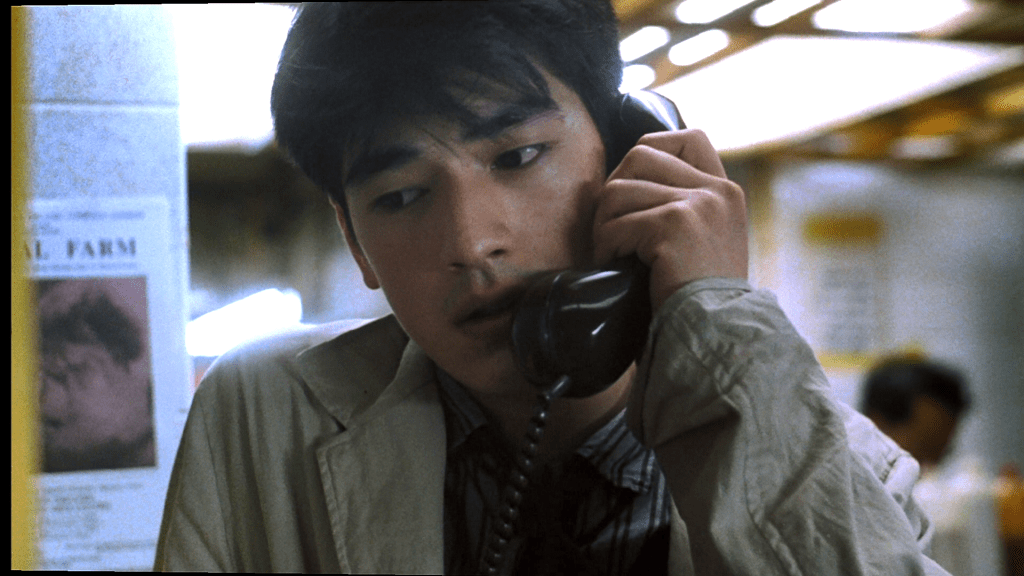
Wong Kar Wai’s 1994 opus Chungking Express is essentially two films in one with seemingly very little connection. The first part follows a police officer pining for a lost love although he soon becomes obsessed with a female criminal dealing drugs and trafficking immigrant workers. The second part follows another police officer as he tries to come to grips with his stewardess girlfriend having dumped him, as the sole employee at his favorite local restaurant becomes obsessed with him and unbeknownst to him, sneaks into his apartment while he is away to clean up and spruce up the place to cheer him out of his depression. In fact, a bridge between these stories is a subtle scene 16 minutes and 46 seconds in, where Faye Wong’s character Faye — the aforementioned restaurant employee — is buying a giant teddy bear in a shop Brigitte Lin’s nameless character (the aforementioned female criminal) is standing in front of.
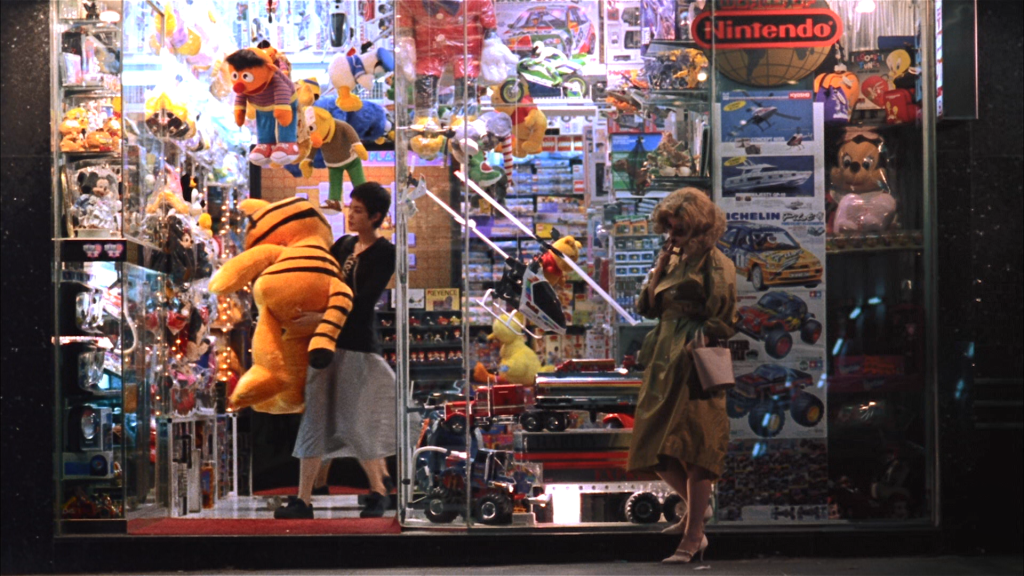
What does any of this mean? Does it have to mean anything? It turns out Cop 223 and Cop 663 frequent the same local restaurant, but they never meet each other and Cop 223 is only familiar with the owner while Cop 663 knows both the owner and Faye. The two cops might know each other, but we never see them meet; no grand coincidences tying fates together. With this bold disregard for the sensibilities of Western tastes and formulaic storytelling, Wong Kar Wai’s Chungking Express is a fine example of filmmaking par excellence, with nearly every production aspect being intentional, and the ones that were accidental or improvised still increasing the value.
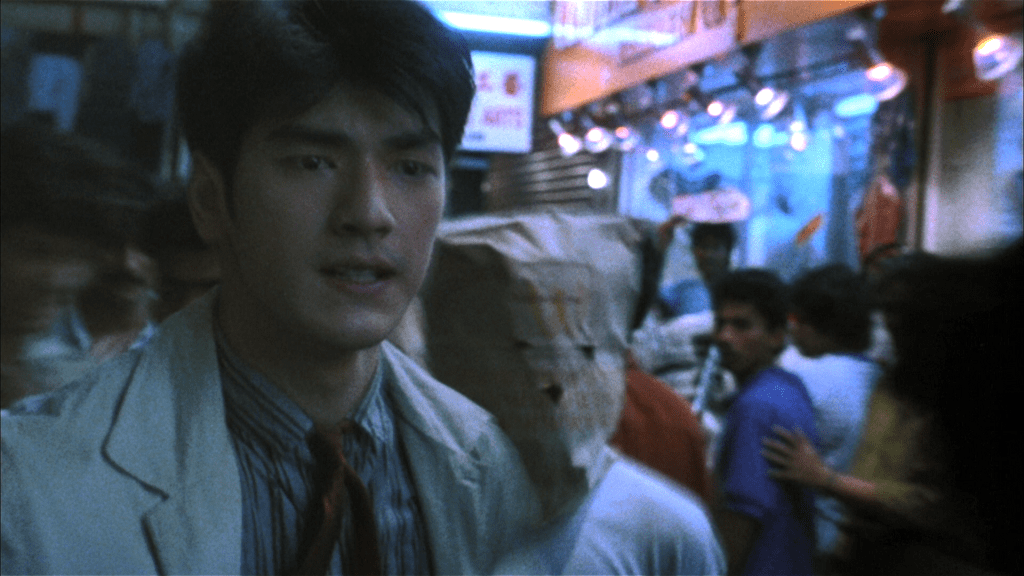
It is impossible to discuss Chungking Express without mentioning cinematographer Christopher Doyle. Beginning with a kinetic chase scene shot with an intentionally low shutter speed to create an extremely hazy, swirling effect, this introduction serves as a visible indication of how the story will unfold. The scene is still easy to follow because the camerawork is not obscuring the action.
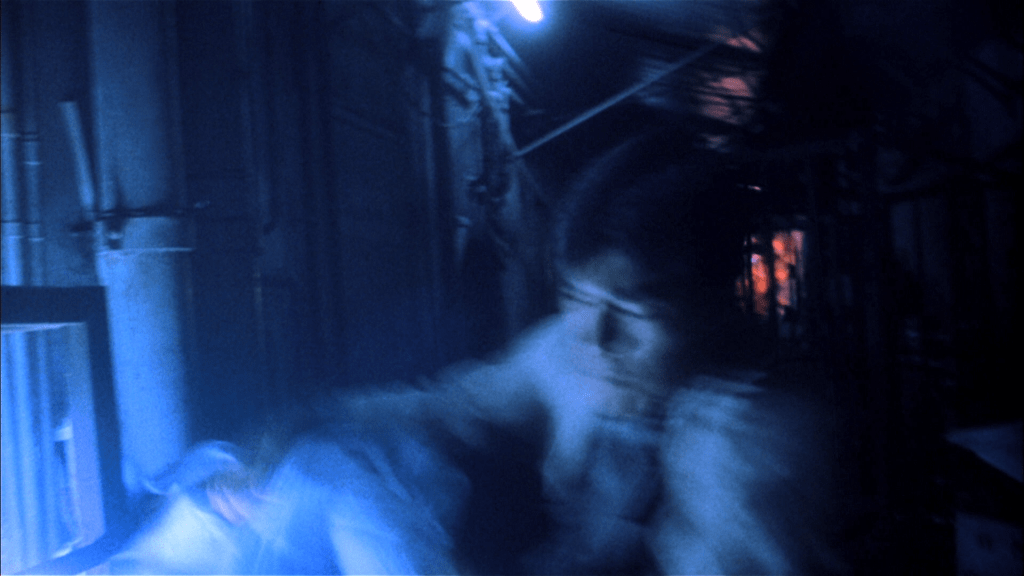

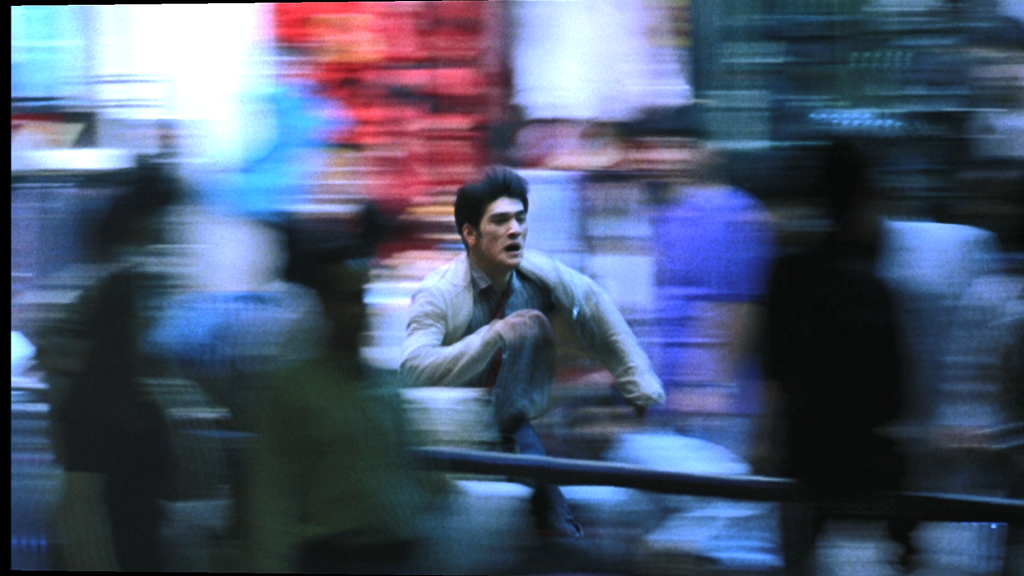
This low shutter speed filming returns in a scene where Cop 223 is subduing a suspect about 17 minutes in. Another scene 21 minutes shows Brigitte Lin being hounded by the immigrants she tried to help because she kidnapped one’s daughter. However, the most striking use is at the very beginning of the film — a sequence of Cop 223 running through a crowd along a sidewalk — that also showcases the technique of step printing, which involves duplicating film frames to simulate slow motion.
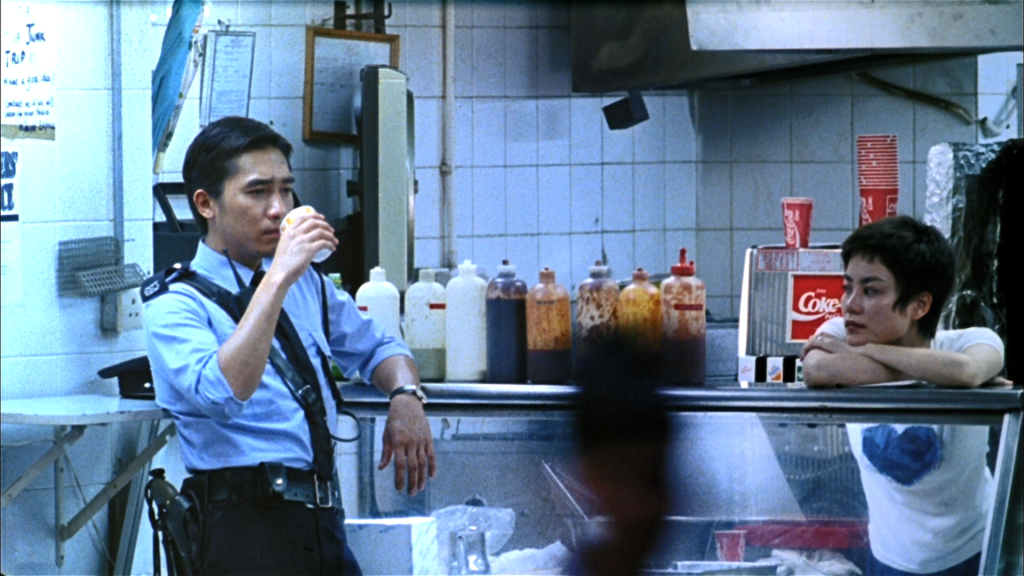
This technique is largely absent from the more naturalistic second half albeit for a brief moment where Cop 223 is enjoying a cup of coffee as Faye watches while people pass by in the foreground.
The sound design is minimal, but there are repeated occurrences of music that begin diegetically and become non-diegetic, and vice versa. The second musical piece in the film — a Hindi song representing the Indian immigrants that Brigitte Lin’s femme fatale character is trying to find illegal work for in Hong Kong — stands out as a song that is always purely non-diegetic the multiple times it is heard. It’s a trait that is shared by a breezy horn piece that marks the beginning of the finale of Cop 223’s saga as he awakens early in a hotel room with Brigitte Lin to clean her shoes as she sleeps. The leitmotif of the first half of the film, “Things in Life” by Dennis Brown serves almost as a narration for Takeshi Kaneshiro’s Cop 223 and his story arc. “It’s not every day we’re gonna be the same way/There must be a change somehow” is the opening line appropriated as a refrain; Cop 223 insists on eating canned pineapples until 1 May in the hopes that his ex-girlfriend May will return to him. It equally applies to Brigitte Lin’s character as she increasingly sees the dead end her criminality will lead to; in an incredibly poignant moment, the lyric “there must be a change somehow” is sung as Brigitte Lin’s character makes a life-changing decision.
This musical matching is repeated when Dina Washington’s “What a Difference a Day Makes” plays non-diegetically when Cop 663 confronts Faye in her restaurant the day after he caught her having broken into his apartment, but he’s not upset with her like he was the previous day. In much the same way, “California Dreamin’” turns up in the second half (alternating between diegetic and non-diegetic) whenever Faye becomes listless. It’s a great use of sound and music to emphasize the character’s untamed spirit. When Cop 663 runs into his ex-girlfriend again in a convenience store, there is no music and very little ambience, a silent but only slightly awkward encounter as he’s already beginning to be at peace with Faye in his life.

There is very little symbolism or metaphor to decipher. What you see is what you get and sometimes asking questions only complicates matters. Sometimes, you have to surrender yourself to a narrative and accept what is front of you. Could Faye and her unorthodox behavior really help Tony Leung’s Cop 663 get over his flight attendant lover leaving him? Why should you care when you get a glimpse of the famous Central–Mid-Levels escalator?
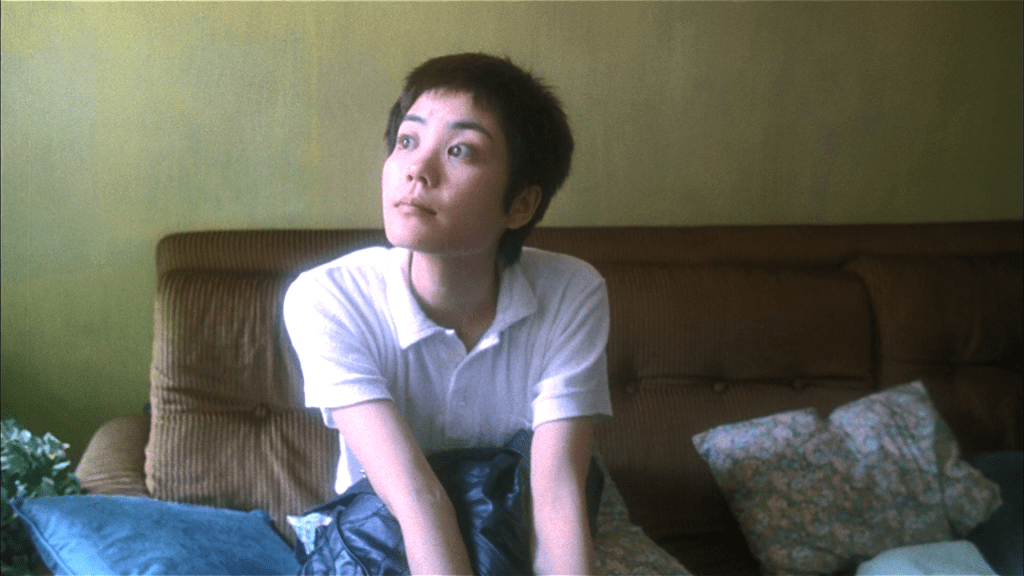
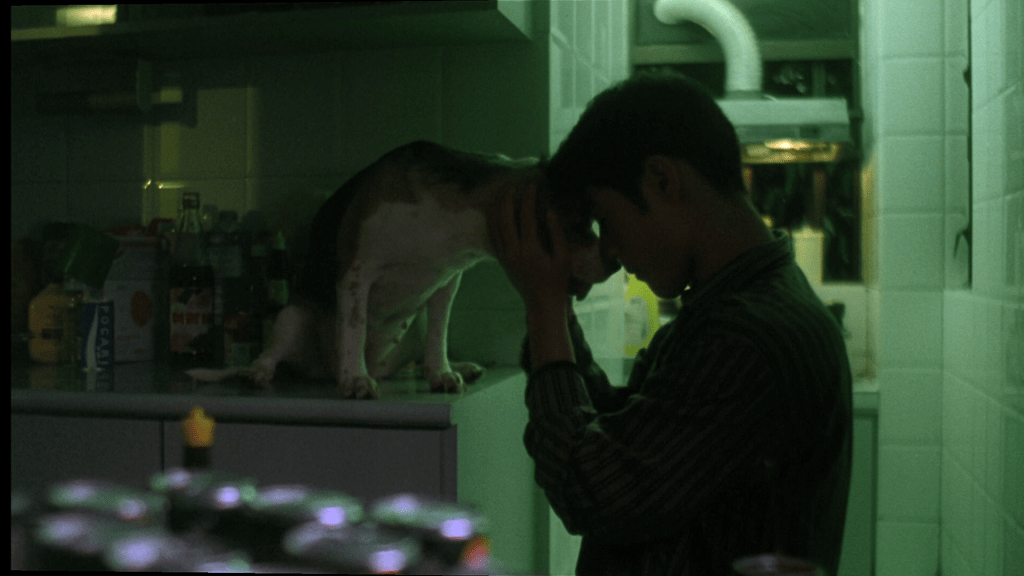
Chungking Express is an exploration of obsession. Cop 223’s obsession with his ex-girlfriend May and Brigitte Lin, Cop 663’s obsession with his ex-girlfriend, Faye’s obsession with Cop 663 and the song “California Dreamin’,”and perhaps an obsession with escaping. Cop 223 wants to escape his feelings for May, Cop 663 wants to escape the memories of his relationship with Valerie Chow’s flight attendant, and Faye wants to escape Hong Kong to see the world.

This is not a film that the average moviegoer can simply sit down to watch and understand. Roger Ebert described Chungking Express as a film you watch and “enjoy it because of what you know about film.”[1] I have to agree with that, given what the typical reactions have been from my classmates who are unfamiliar with cinema of this nature.
[1] https://www.rogerebert.com/reviews/chungking-express-1996
When I first saw Karl Markovics’ directorial debut Atmen (English title: Breathing), a 2011 Austrian film about a juvenile inmate who slowly learns to empathize with others, I remarked to my friend that as I get older I’m increasingly of the mindset that some movies try only to entertain you while others try to change your life. Chungking Express is at first a challenging but rewarding viewing, although the challenge diminishes with repeated viewings and the rewards increase exponentially. Like Atmen, Chungking Express is not trying to entertain you.

5/5
Chungking Express
102 minutes
1.78:1 AR
In Cantonese with English subs
Written/dir. by Wong Kar Wai
Cinematography by Christopher Doyle and Andrew Lau
Released 14 July 1994
Hong Kong production
Blu-ray Disc from Mei Ah Entertainment
 The Seeming and the Meaning