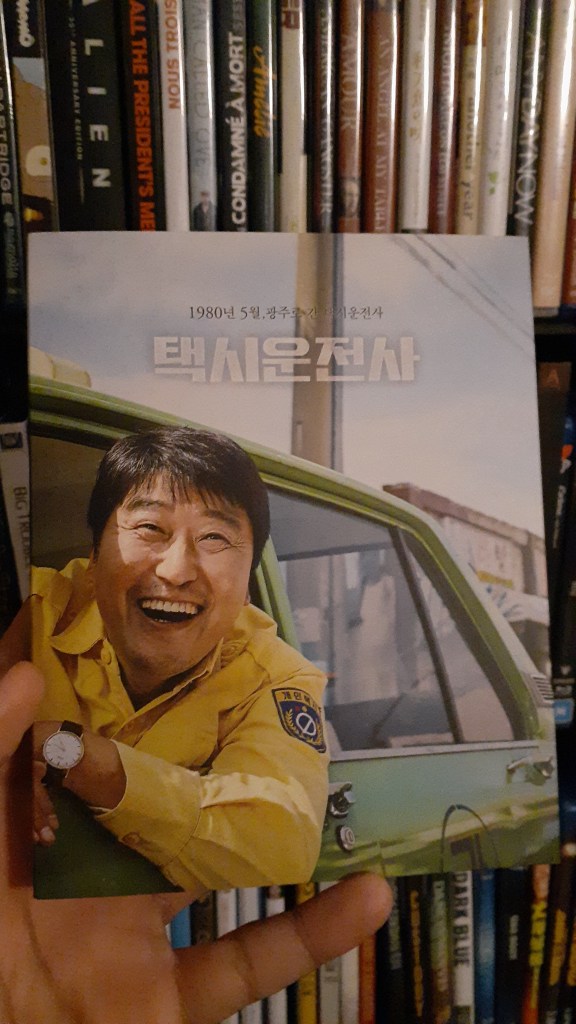
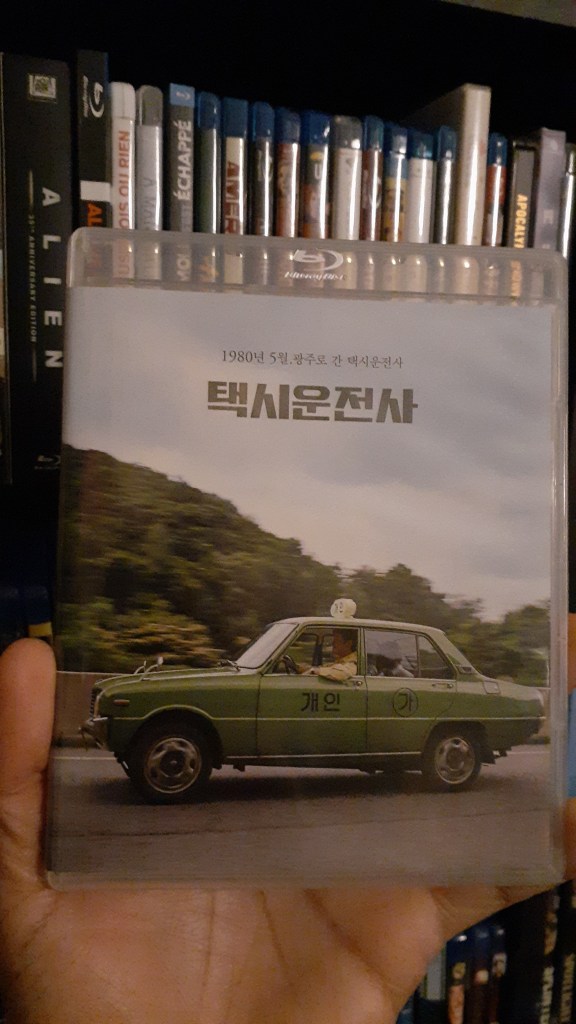
Based on the true story of an unknown taxi driver who drove ARD reporter Jürgen Hinzpeter into Gwangju so that he could cover the Gwangju Uprising in 1980, A Taxi Driver is a historical drama about the nobility of sacrifice and our shared humanity.
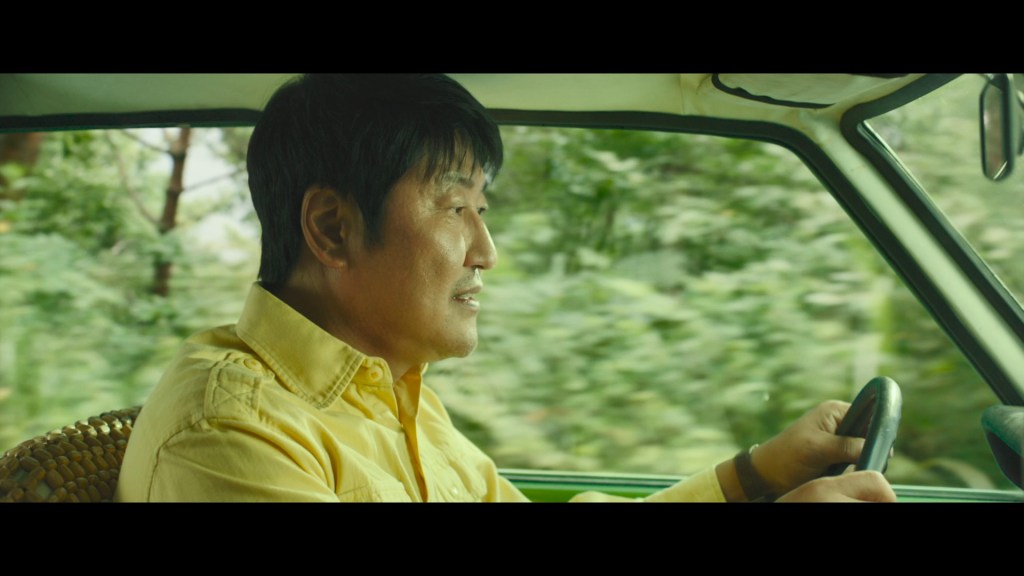
So, this Korean film A Taxi Driver. I have a lot of things to say about it as a moviegoer and also as an outsider viewing Korean culture and pop culture, but I want to be concise. Unfortunately, the movie has some serious problems that hamper a compelling narrative and its deeply moving supporting characters. I’ll try not to stumble throughout.
I should get out of the way that I’m not a huge fan of Song Kang Ho’s commercial fare. I often find his comedy (and that of some other Korean actors) unconvincing but I do like his more dramatic work like in Age of Shadows. But anyway. The lead roles are Song Kang Ho as the taxi driver Kim Man Seob and Thomas Kretschmann as journalist Jürgen Hinzpeter. Song Kang Ho, unfortunately, plays yet another bumbling, bitter coward of a man who narrates his emotions for the audience (this is probably his 1,342nd time in such a role). You realize Kim is unlikable not because he is shown doing unsympathetic things, but because he monologues about how he doesn’t like or understand the protests currently underway and that people should always do what they’re told, obviously no passengers in his taxi at this point. In Song Kang Ho’s defense, I’m also not much of a fan of director Jang Hoon. In fairness, Korean cinema has long had a problem grasping the concept of “show don’t tell” so the problems here are not unique to the film.
Eventually, Kim manages to scheme his way into driving this yet-unnamed German reporter because the driver who was originally booked decided to brag at lunch about the exorbitant fee promised for driving the journalist into Gwangju. While it’s a credit to the film that the focus stays on the taxi driver and his relationship with the journalist rather than making it an overt “Western man saves Korea” that Hollywood would have turned it into, it’s at this point the big cracks start to show.
For starters, the film itself just doesn’t seem to take the May 18 Gwangju Democratization Movement all that seriously. Kim Man Seob continually injects half-hearted acerbic comic relief into scenes but there hasn’t been a setup that requires relief yet, and even if there was, the backdrop of these events is a protest movement where university students were massacred by South Korea’s military dictatorship. It’s one thing to aim to be cathartic, but the drive to create an entertaining movie heavily diminishes the later impact of showcasing the bravery of the protestors and the bonds of their community.
The lack of a somber tone throughout the film until the climax results in an overbearingly schmaltzy direction. A Taxi Driver wants to be a feelgood movie, but it’s centered around a topic that is impossible to feel good about. The roads to democracy and justice are bloody and the film instead wants to use Kim Man Seob’s antics as the focus rather than his character. It’s already established he’s greedy, so why does he need to try to hoodwink the Gwangju taxi drivers over an hour into the film? While he does eventually experience some character development, the convenience of it happening in the last half-hour is a disservice to the people the story is based on and to the audience. There’s also the fact that characters all around him sacrifice for each other, and for him, selflessly, but his greed and bitterness are still punchlines to try to maintain that feelgood tone. “Oh, some university students got shot in the face, but here’s Kim tripping while trying to sneak away and the noise it makes gets him roped back into helping the survivors. Haha! Here he is again naively willing to collaborate with the military when everyone else knows they’ll be killed either way.” Hinzpeter is risking his life and career to get footage of soldiers massacring protestors out of Korea, the students are risking their lives to plead for democracy, the Gwangju taxi drivers willingly share their food and resources with Hinzpeter, the students, and Kim simply out of solidarity, while Kim takes everything for granted. This makes the payoff of his growth worth more at the end, but it’s a journey that should not be as cringe-worthy as it is thanks to his incessantly obnoxious behavior and ignorance.
Eventually, his character development starts and he redeems himself, but the lead up to that was shaky and not wholly connected. A climactic chase scene results in unanswerable questions about how he could have been tracked for so long and how others knew exactly where to meet up with him, but it’s forgivable in context because maybe the other drivers were following him from a distance and they do, after all, know the roads of Gwangju better than him since he’s from Seoul.
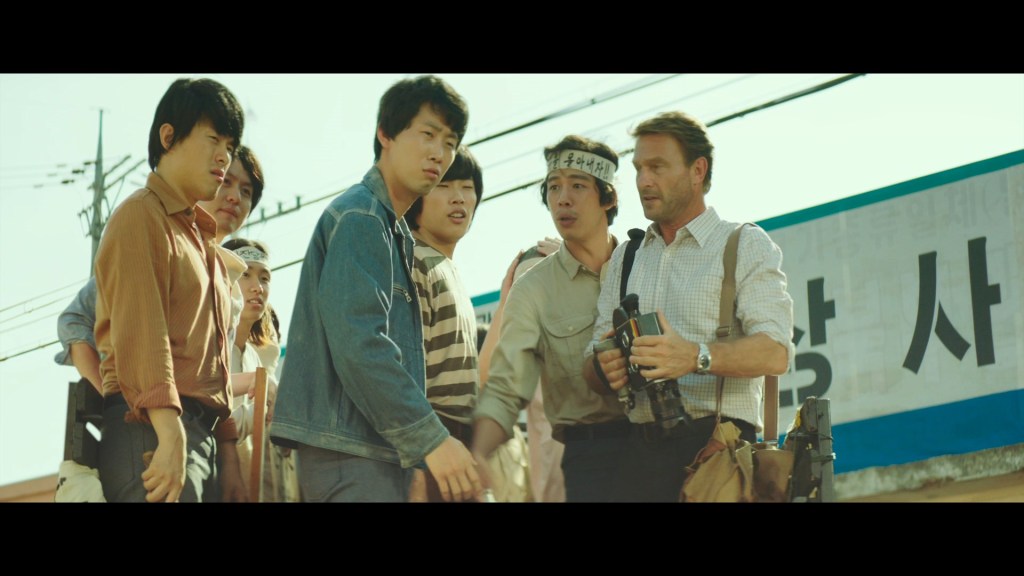
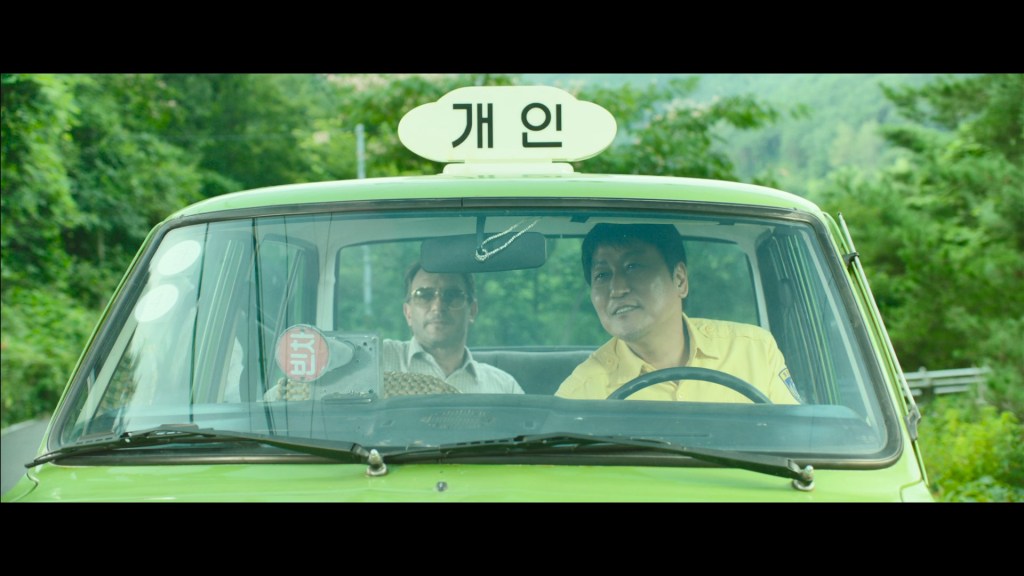
Now, it’s not all negative. The shots in the interior of the taxi do an excellent job conveying the forced closeness of Kim and Hinzpeter; cramped but not quite claustrophobic. Physically close but emotionally distant due to distrust and a language barrier. The soundtrack never overpowers scenes as is typical in these types of films. The dialog except for Kim’s early monologues never feel forced or soapbox-y. The film does a great job establishing that none of these people are saviors or superheroes; they were ordinary folks who did extraordinary things because they believed it would further a cause that was just. Even Hinzpeter at one point loses hope and considers quitting before Kim encourages him to continue. Many of these people did not live to see the benefits they sought for society; the last half hour of the film is where the storytelling really shines because it seemingly takes that long for the film to appreciate that historical reality of the Gwangju Uprising and the risks people took to resist the dictatorship.
Overall, this is a story that needed to be told somehow, but choices should have been made to tell the story with more reverence for the subject matter. I may be slightly biased against mainstream Korean cinema’s similarities to Hollywood, but I would still recommend this movie. In fact, I recommend pairing it with another Korean film centered around the events of May 18; 1987: When the Day Comes because that film is broader in scope and also more respectful in its depiction of figures and events associated with the Gwangju Uprising. I might review that one at a later date. A Taxi Driver is an above average film, but worthwhile at least for the historical backdrop and for the deeply moving display of sacrifices the lead and supporting characters make for each other.
3/5
A Taxi Driver
128 minutes
2.35:1 AR
In Korean and English with English and Korean subtitles
Dir. by Jang Hoon
Cinematography by Go Nak Seon
Released 2 August 2017
Korean production
Blu-ray Disc from FNC Entertainment
 The Seeming and the Meaning
You must be logged in to post a comment.